Most roof inspections in Delaware, New Jersey, and Pennsylvania run between $150 and $400 in 2026. That’s the short answer. The actual number depends on your roof size, the inspection type, and who’s doing it. Some companies, us included, offer free inspections in certain situations.
National figures skew higher and wider than that. Angi’s 2026 cost data puts the average roof inspection at $250, with a range from $75 up to $1,150 depending on roof size and inspection type, and the National Roof Certification & Inspection Association cites a typical range of $200 to $700. Neither number is wrong, they’re just pulling from every market in the country, including ones with steeper roofs, harder-to-reach properties, and higher labor rates than ours. If a quote you’re getting locally lands way outside $150 to $400 with no drone or infrared work involved, that gap is worth asking about.
What Actually Drives the Price
Roof size and pitch
Roof complexity matters more than square footage in most cases. A 1,200-square-foot ranch in Newark, Delaware is going to cost less to inspect than a 3,500-square-foot colonial in Cherry Hill with multiple dormers, valleys, and a steep pitch. Pitch and accessibility are the two things that add time on the roof, and time on the roof is what you’re paying for. A single-story walkable roof might take 30 minutes. A three-story roof with a 10/12 pitch and no safe ladder access can take twice that, plus rigging.
Accessibility
Number of stories plays into that too, mostly through access and safety equipment rather than the inspection itself. Region matters less than you’d think for the inspection fee, though it shows up indirectly: coastal properties tend to have more flashing points and more wind-related wear to check, which adds a few minutes per feature. And the type of report you need changes things too. A basic walk-and-look costs less than a detailed report written for an insurance claim or a mortgage lender, since that version has to hold up to someone else reading it later. More on that under certifications below.
Does roof material change the price?
A little, mostly through how long the walk takes and how carefully the inspector has to move. Asphalt shingle roofs, still the bulk of what we inspect, are the baseline for that $150–$400 range. Metal and synthetic roofs inspect quickly since there’s less individual material to check piece by piece. Tile and slate take longer, partly because the inspector has to be more careful about not cracking anything underfoot, and wood shake needs a closer look for splitting and moss. Flat or low-slope roofs are their own category entirely; membrane seams and ponding water are what we’re checking there, not shingles, and that inspection looks and prices differently than a pitched residential roof. Commercial roof inspection cost follows a similar logic but scales with square footage and access equipment, so a strip-mall roof or an apartment building isn’t going to fit neatly into a residential price range; those get quoted separately once we know the footprint. None of this usually pushes a typical house outside the general range, it just nudges you toward the top or bottom of it.
Inspector certification level factors in too, though it shows up more in the value than the price tag. A GAF Master Elite contractor charging the same $200–$400 as a less experienced inspector is still the better deal, because they’re going to catch things the other guy misses. More on that below.
Cost by Inspection Type
| Inspection Type | Typical Cost |
|---|---|
| Basic visual inspection | $100–$200 |
| Physical / hands-on inspection | $200–$400 |
| Drone inspection | $150–$350 |
| Infrared / thermal scan | $300–$500+ |
| Structural assessment (engineer involved) | Priced per visit, not flat-rate |
| Satellite / remote imagery review | Not commonly priced separately in our market yet |
The $150–$400 range quoted at the top of this page covers the physical, hands-on inspection most homeowners actually book; a bare visual walk-through from a ladder runs cheaper, which is why it shows up lower on the table above. Structural assessments are the odd one out. If we see something during a regular inspection that suggests the framing itself is compromised, sagging rafters, a bounce in the decking that feels wrong underfoot, we bring in a structural engineer, and that’s billed separately based on scope. Nobody prices that one as a flat fee, and be wary of anyone who tries to.
Worth noting since it’s where a lot of the “average cost” headlines online come from: Angi’s national physical-inspection figure is actually lower than ours, $75 to $200, while their infrared number runs higher, $400 to $600. Averages blend a lot of different markets and roof types, so don’t be surprised when a national number and a local quote don’t match up exactly.
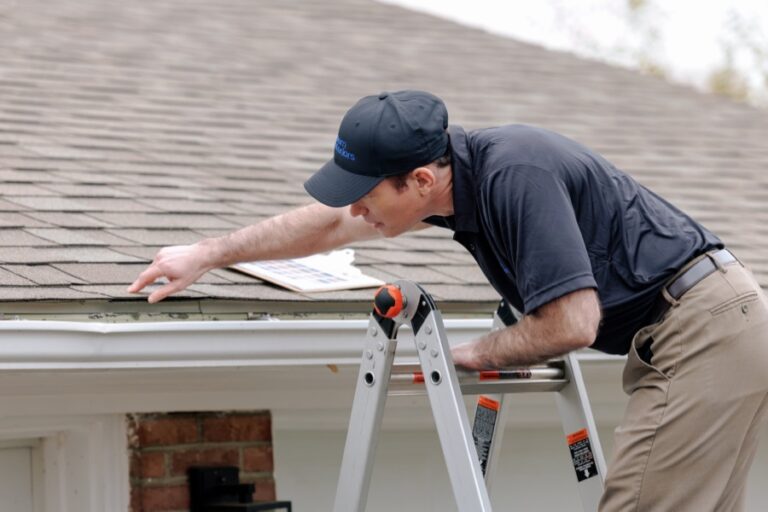
Physical, hands-on inspection is what we do as standard practice, and what we’d recommend for any pre-purchase or damage-related inspection. The inspector is actually on the roof: touching materials, lifting shingle edges, checking for soft decking by feel. You can’t feel a soft spot in the decking from a ladder, and no drone footage tells you that either.
Visual inspection from a ladder or the ground is fine for routine checks, limited on steep or high roofs where getting close isn’t safe. Drone inspections have gotten a lot more common over the past couple of years, and the high-resolution images are genuinely useful, especially for roofs that are dangerous to walk. We use them as a supplement when the roof geometry calls for it, not as a replacement for hands-on work. Infrared/thermal imaging can detect moisture trapped beneath the surface without tearing anything apart; useful for a suspected hidden leak with no visible source, overkill for a routine annual check. Satellite-based remote review is starting to show up in some markets for high-level triage, but it’s not something we’d rely on for an actual buy/repair decision, and pricing for it hasn’t really settled yet around here.
Commercial vs. Residential Roof Inspection Cost
Everything above assumes a house. Commercial roof inspection cost works differently because it’s priced by square footage and access equipment rather than a flat range, so a strip-mall roof or a small apartment building doesn’t fit neatly into the $150–$400 residential number. Low-slope commercial membranes also get inspected for different failure points (seams, ponding, drainage) than a pitched shingle roof, so if you manage a commercial property, expect a custom quote rather than a table like the one above.
When You Can Get a Free Roof Inspection
Reputable roofing contractors, us included, offer free inspections when there’s a reasonable chance you’ll need work done. That sounds transactional, and it kind of is. But it also makes sense from your side. If a storm just rolled through, or you’re seeing water stains on your ceiling, or your roof is 18 years old and you want to know where things stand, a good contractor will come out and look at no charge.
We offer free roof inspections across our service area. No strings attached. If your roof is fine, we tell you it’s fine. We actually prefer that outcome, happy homeowners refer their neighbors.
Free inspections typically apply in these situations: after storm damage (hail, wind, fallen branches, the kind of thing your homeowners policy may cover, and if you’re filing that claim, getting the inspection done promptly matters, insurers generally want documentation while the damage is still fresh); when you’re thinking about selling, since a pre-listing inspection helps you price accurately and avoid surprises during the buyer’s inspection; before you close on a purchase, if your home inspector flagged something or you want a specialist opinion before you’re the owner; or when your roof is simply aging into the window where problems start. Asphalt shingles in our region last roughly 20 to 30 years depending on the product, installation, and ventilation. If yours is in that window, a baseline inspection is smart. We have a full breakdown on how long roofs last by material if you want specifics on your type.
Visible problems from the ground count too. Curling shingles, granule loss in gutters, sagging sections. These are all signs you may need a new roof, and if something looks wrong, it’s worth checking rather than watching it get worse.
One thing we’ll say clearly about “free” inspections from companies you don’t know: after every major storm, trucks with out-of-state plates show up offering free inspections. Some are legitimate. Many aren’t. Storm chasers find “damage” whether it exists or not, file inflated insurance claims, do mediocre work, and are gone before you realize there’s a problem. We’ve repaired a lot of those roofs. Be skeptical of anyone who knocks on your door unsolicited right after bad weather.
If you’d rather skip the research and just get someone reputable out there, request a free quote and tell us what’s going on. Storm damage, an aging roof, a sale coming up, whatever it is.
What a Real Inspection Actually Covers
Our inspections follow a 14-point checklist. Not every company does this. Some show up, walk the roof for ten minutes, and hand you a vague verbal summary. That’s not an inspection.
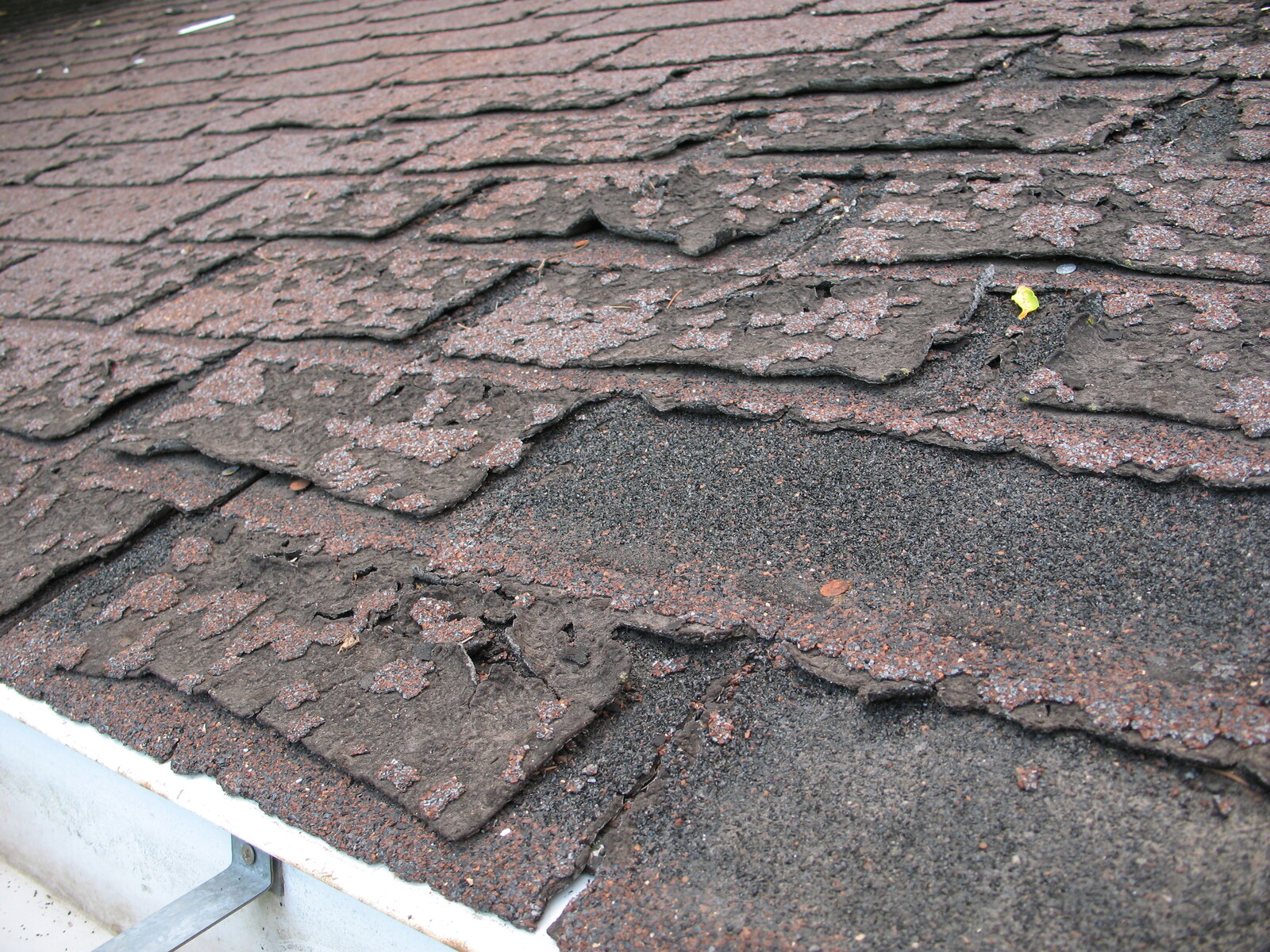
Here’s what we check: shingle and roofing material condition (cracking, curling, blistering, missing pieces, noting manufacturer and approximate age when we can identify it); flashing integrity around chimneys, vents, skylights, and walls, since flashing failures cause a disproportionate share of leaks, probably more than any other single issue; ridge and hip caps; gutter condition and attachment; soffit and fascia; attic ventilation, both intake at the soffits and exhaust at the ridge, because improper ventilation voids manufacturer warranties and accelerates shingle aging (we’ve seen 25-year shingles fail at 12 years because of bad ventilation); attic insulation levels when accessible; decking condition, meaning soft spots, water staining, or visible rot from the attic side; chimney and skylight surrounds; valleys; drip edge presence and condition; the quality of any previous repairs, since tar patches everywhere or multiple shingle layers tell us somebody already tried to fix a problem and probably didn’t solve it; and an overall structural read for sagging ridgelines or uneven planes.
Pipe boots and vent seals get their own paragraph because they matter more than the list order suggests. The rubber boots around your plumbing vents deteriorate faster than everything else on the roof, and this is the item we feel most strongly about on the whole checklist. In roughly 70% of the leak calls we get, the culprit is a cracked pipe boot. It’s a $15 part that sits there quietly failing for years while homeowners chase “mystery leaks.” If you get nothing else from reading this, go look at your pipe boots. They’re the small rubber collars where the white PVC pipes exit your roof. If they’re cracked or pulling away from the shingle, that’s your leak.
After the inspection, you get a written report with photos. Not a verbal “looks okay.” Photos of every issue we found, labeled and explained. If repairs or replacement are warranted, we’ll give you an estimate on the spot or within 24 hours. If your roof is in good shape, we’ll tell you when to come back.
Roof Certification Cost
A roof certification is a different animal from a standard inspection, even though the on-roof work looks similar. Instead of a general condition report, you get a signed letter estimating the roof’s remaining service life, usually issued as a 2-year or 5-year certification. Lenders ask for these on some mortgages. Insurers ask for them on older roofs before writing or renewing a policy. Buyers and sellers ask for them during real estate transactions to settle a disagreement about how many years are left.
Expect somewhere around $75 to $200 for the certification itself. That’s a bit less than you might guess given it involves paperwork on top of the inspection, mostly because the underlying walk-through overlaps so much with a standard visit that contractors aren’t really pricing two separate jobs. Ask upfront whether the quote includes the letter itself or just the walk-through; some contractors bill those as separate line items, and you don’t want to find that out after they’ve already been on the roof.
Not every roofer will issue a certification even if they’ll happily do the inspection. It’s a liability thing. A certified roof inspector cost reflects that they’re putting their name on a signed document rather than a spoken opinion. If yours is one of the situations above (mortgage, insurance renewal, sale) call ahead and confirm the company actually does certifications before you book, rather than finding out on site that you need a second visit from someone else.
Choosing the Right Inspector
Pick a licensed, insured roofing contractor over a general handyman or home inspector for any roof-specific concern.
Beyond that, look for manufacturer certifications. GAF Master Elite certification covers the top 2% of roofing contractors nationally, it requires ongoing training, proper insurance and licensing, and a track record of quality work. Why does this matter for an inspection? Because a contractor who installs at that level is going to catch things during an inspection that a less experienced eye won’t. Ventilation problems. Early-stage flashing failure. Marginal decking that’ll need replacement within two years. These things aren’t obvious.
Red flags: no physical business address, won’t provide proof of insurance, demands payment before doing anything, pressures you to sign the same day, shows up from out of state right after a storm with a “limited time” offer.
What Happens After
You’ll get the report. Then you’re looking at one of three scenarios: your roof is fine, so file the report and schedule your next check in a year or two; minor repairs are needed, cracked boots, a few missing shingles, flashing work, usually a few hundred dollars and worth doing now before it becomes a bigger problem; or you’re looking at major issues or end-of-life, in which case our roof replacement cost guide covers pricing, materials, and what the process looks like. Your homeowners policy may cover some or all of it if a storm contributed to the damage.

If you already know you want a number rather than a report, you can skip straight to a free quote request and we’ll get someone out to look.
FAQ
How much does a roof inspection cost?
Between $150 and $400 in our area, though many roofing contractors offer free inspections. That’s also the honest answer to “how much should a roof inspection cost”: if a quote comes in well above $400 for a standard residential inspection with no drone or infrared work involved, ask what’s driving it.
How much is a roof inspection?
Same answer, different phrasing: $150 to $400 around here, sometimes free.
How much for a roof inspection?
$150 to $400, or nothing if a contractor thinks there’s a reasonable chance you’ll need repair work afterward.
What’s the average cost of a roof inspection?
Locally, most homeowners land somewhere in our $150–$400 range depending on roof size and inspection type. Nationally, Angi’s 2026 data puts the average roof inspection cost at $250 with a much wider spread ($75 to $1,150) since that number covers every roof type and market in the country. NRCIA cites $200 to $700 as typical. Take national averages as a ballpark, not a quote.
How much does a roof leak inspection cost?
Usually the same as a standard physical inspection, $150 to $400, unless we can’t find the source right away and need to do a water test or bring in infrared to trace moisture behind the decking. At that point you’re closer to the $300–$500+ infrared range. Leak-tracing is genuinely one of the harder parts of this job; sometimes water travels three feet from where it’s actually entering before it shows up as a stain, and we’ve had calls where the visible damage was nowhere near the real problem.
Are roof inspections free?
Ours are, in a lot of cases. No charge for the inspection, no obligation to hire us for work afterward. The catch, if you want to call it that, is that we’re hoping you’ll choose us if you do need repairs. That’s it. No hidden fees, no “inspection deposit,” nothing like that. We’ve been doing this long enough in Delaware and the surrounding states that our reputation matters more to us than a $200 inspection fee, and frankly, if your roof is in good shape, we’d rather tell you that and have you call us in five years than oversell a repair you don’t need. Not every contractor works this way, so ask before you book.
How often should I get my roof inspected?
Once a year, plus after major storms.
Can I inspect my roof myself?
You can look from the ground with binoculars, and that’s actually worth doing after a bad storm. But walking your own roof is a different story. Falls from residential roofs account for a significant number of ER visits every year, and you’re unlikely to catch the less obvious issues (ventilation problems, early-stage flashing failure, soft decking) without experience. The ground-level scan is fine. The climbing-up-yourself part is where we’d push back.
What’s the difference between a roof inspection and a home inspection?
A home inspection covers the entire house at a surface level. A dedicated roof inspection from a roofing contractor is focused and detailed. General practitioner versus specialist. The referral from your home inspector to get a dedicated roof inspection exists for a reason, they’re not being evasive, they genuinely can’t go as deep as someone who looks at roofs all day. Worth mentioning: some home inspectors bundle a roof check into their general home inspection fee ($300 to $500 for the whole house). We’ve seen home inspection reports that say “roof appears in good condition” on houses where we later found $15,000 in damage. Not because the inspector was dishonest, but because they weren’t looking with the same eyes.
Do I need a roof inspection before buying a house?
We think so, especially if the home inspector flagged anything or the roof is more than 15 years old. An inspector saying the roof “has about five years left” based on visual age alone doesn’t account for installation quality, ventilation, previous repairs, or localized damage you can’t see from the ground. A dedicated inspection before closing could save you from inheriting a $12,000 to $18,000 problem with no recourse.
What is the 25% rule for roofing?
It’s a code concept, not a universal law: in a lot of jurisdictions, if a roof section needs more than 25% of its area repaired or re-covered in a given project, code requires the whole roof (or that whole slope) to be brought up to current code rather than patched. It comes up most often on re-roofs and insurance claims where an adjuster is deciding between “repair” and “replace.” Whether it applies to your project depends on your local building department and, for insurance work, your carrier’s own claims guidelines, so this is one to confirm locally rather than assume.
Related: How long different roofing materials last and signs it’s time for a replacement.