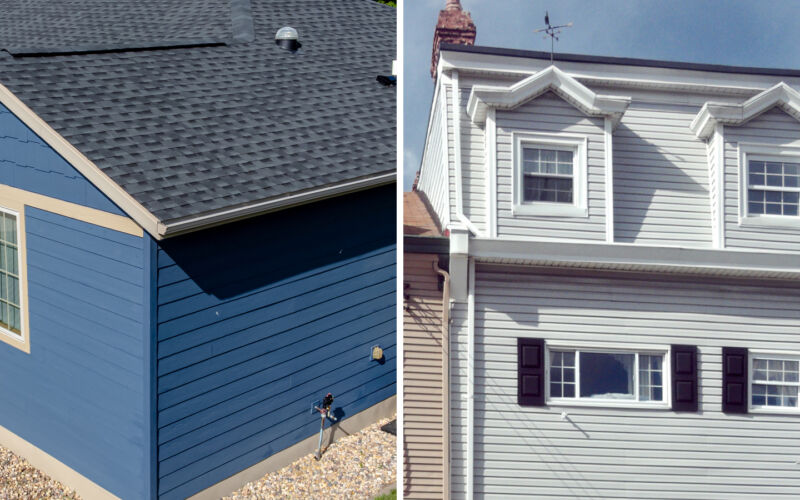
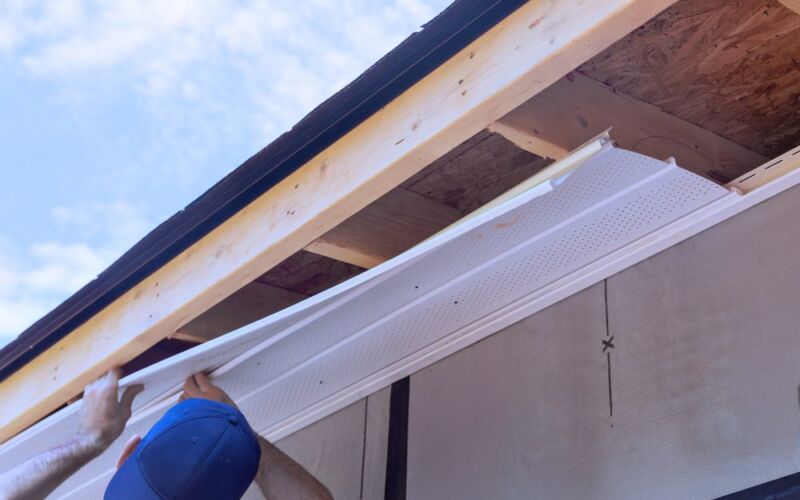
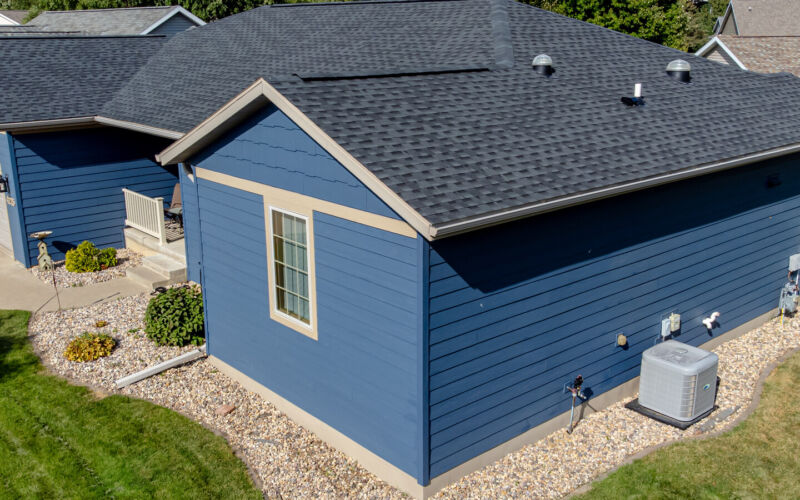
Vinyl siding on a typical 2,000 sq ft home runs $7,000 to $16,000 installed. Fiber cement (James Hardie, specifically) lands between $12,000 and $26,000. Wood and cedar push $14,000 to $28,000. Those ranges come from jobs we’ve quoted and completed in the last year, not national averages padded to cover every zip code in the country.
But those numbers only tell part of the story. The siding itself is maybe 60% of your total cost to replace siding. The rest is old siding removal, house wrap, trim, soffits, and whatever surprises live under the boards you can’t see yet. That’s the part that blows budgets.
What Each Material Costs (Installed)
The per-square-foot number is what drives most comparisons.
Vinyl Siding Cost
$3 to $8 per square foot installed. On a 2,000 sq ft home, that’s $7,000 to $16,000 all in. The range is wide because “vinyl” covers everything from builder-grade .040″ panels to insulated premium vinyl that’s twice as thick. Builder-grade vinyl is the cheapest siding you can put on a house. It shows. Premium insulated vinyl is a different product entirely, closer to $6 to $8/sq ft, and honestly worth the upcharge if you’re going vinyl at all.
We install a lot of vinyl. It’s the right call for rental properties, budget-conscious homeowners, and anyone who never wants to repaint. The differences between fiber cement and vinyl are bigger than most people expect.
Fiber Cement Siding Cost
$6 to $13 per square foot installed. Typical home: $12,000 to $26,000. James Hardie owns about 90% of this market and for good reason.
This is where siding installation cost jumps. Fiber cement is heavy (a 12-foot plank weighs about 2.5 lbs per linear foot), requires specialized cutting tools because the dust contains silica, and takes longer to install than vinyl. Labor runs 50-60% of total cost on fiber cement jobs versus 40-50% on vinyl. The material itself isn’t that much more expensive than premium vinyl. You’re paying for the skill to install it correctly.
If your plan is to stay in the house 15+ years, fiber cement is the material I’d push you toward. The math works out. It lasts 40-50 years with minimal maintenance, holds paint for 15+ years, and it won’t melt if your neighbor’s grill gets too close to your wall. (We had a homeowner in Bear whose vinyl siding warped from a neighbor’s grill reflected heat off a window. Not a conversation anyone wants to have.)
Engineered wood like LP SmartSide sits at $5 to $10 per square foot. Splits the difference between vinyl and fiber cement, but most homeowners in this area who are willing to spend more than vinyl end up going Hardie.
Cedar and wood siding runs $7 to $14 per square foot ($14,000 to $28,000 for the typical home). Beautiful stuff. Serious maintenance commitment. If you’re not prepared to stain or paint every 3 to 5 years, skip it.
Aluminum is $4 to $9 per square foot and mostly shows up in re-side jobs on older homes. Not a material we recommend for new installs.
The Hidden Costs Nobody Quotes Upfront
Your actual invoice will include several line items beyond the siding itself, and they can add 30 to 50% to the base cost.
Old Siding Removal
$1,000 to $3,000 for most homes. A crew strips every piece, loads it into a dumpster, and hauls it away. Two-story homes take longer. Some contractors offer to install over existing siding to save on removal cost. Sometimes fine (vinyl over aluminum), sometimes a terrible idea (covering up moisture damage you can’t see).
One scenario that changes everything: asbestos. Homes built before 1980 may have asbestos-containing siding. Licensed abatement runs $8 to $12 per square foot. On a full home, abatement can cost more than the new siding itself. Get it tested before you sign a contract.
House Wrap
$500 to $1,500. When old siding comes off, the house wrap underneath (Tyvek or similar) is often deteriorated, torn, or missing altogether. Replacing it is sometimes required by code and almost always the right thing to do. It’s your home’s primary moisture and air barrier. Skipping it to save $800 is a decision you’ll regret.
Trim, Soffits, and Fascia
Can add $2,000 to $5,000. You get a quote for siding and assume it includes trim around your windows, corner boards, soffits under your eaves. Sometimes it does. Sometimes it doesn’t. When the old siding comes off and the trim is rotted or looks terrible next to fresh siding, you’re adding scope mid-project at the worst possible time.
Ask about trim upfront. Every time.
What Drives Your Number Up (or Down)
Multi-story homes cost 20 to 30% more than single-story. More scaffolding, slower work, more risk.
Permits run $150 to $500 in most municipalities around here. New Castle County requires one for full siding replacement. Sussex County requires permits for basically all construction work. Don’t skip them to save a few hundred bucks.
And then there’s sales tax. Delaware has none. On a $15,000 siding job, the material portion might be $7,000 to $9,000. That same job in Pennsylvania adds 6% on materials ($420 to $540 extra). New Jersey charges 6.625% ($464 to $596). Not a fortune, but it adds up, and most national cost guides don’t account for it.
A Note About These Numbers
I want to be upfront: siding pricing varies more than roofing pricing. The number of windows, doors, corners, and bump-outs on your house matters as much as total square footage. A 2,000 sq ft home with 20 windows and 3 bump-outs costs meaningfully more to side than a simple box with 12 windows. Treat every number on this page as a range, not a quote.
For a comparison to what roofing projects run, we’ve broken down roof replacement cost in Delaware separately.
How Material Choice Affects Long-Term Cost
The cheapest siding to install isn’t the cheapest siding to own. It’s math.
Builder-grade vinyl at $7,000 installed lasts 20 to 30 years but fades and can crack in cold weather. Fiber cement at $18,000 lasts 40 to 50 years, holds paint far longer, and adds curb appeal that shows up at resale. Over 40 years, the vinyl house gets re-sided twice ($14,000). The fiber cement house gets re-sided once ($18,000). For $4,000 more across four decades, you get a better-looking house the entire time.
If you’re selling in three years, spend accordingly. Premium fiber cement on a flip is money you won’t get back. Understanding how long siding lasts by material should drive the decision. And if you’re still choosing a material, our guide to types of siding covers the full lineup.
FAQ
How much does it cost to replace siding on a 2,000 sq ft home?
$7,000 to $28,000 depending on material. Vinyl is the low end, fiber cement is mid-range, wood is the top. Add $2,000 to $5,000 for old siding removal, house wrap, and trim work that most base quotes don’t include.
Is fiber cement siding worth the extra cost?
Yes, for most homeowners who plan to stay in their house. It lasts twice as long as vinyl, requires less maintenance, looks better, and resists fire, rot, and insects. The upfront cost is 60 to 80% more than vinyl but the per-year cost over its lifespan is lower. The exception is investment properties where the timeline is short and curb appeal matters less than cash flow.
Can new siding go over old siding?
Sometimes. Vinyl over aluminum or vinyl over wood in decent shape can work. But it adds bulk to frames, can trap moisture, and hides problems. We’ve pulled off new siding installed over rotted sheathing because someone took the shortcut five years earlier. If removal costs $1,500 to $3,000, it’s almost always worth it.
Do I need a permit for siding replacement?
In most Delaware Valley municipalities, yes.