Roof Lifespan
How Long Does a Roof Last?
It comes down to two things: what your roof is made of, and how well it was put on. Here’s a realistic lifespan for each common material, why a good roof can die young, and how to gauge how much life yours has left.
How long do roofs last?
Most roofs last somewhere between 15 and 100 years, and the material is what decides which end of that range you’re on. Asphalt shingles, the roof on most American houses, run 15 to 30 years depending on the grade. Metal, slate, and quality tile can outlast the mortgage, and sometimes the house’s next two owners. Find your material in the table below, then keep reading, because the number next to it isn’t the whole story.
| Material | Typical lifespan | Notes |
|---|---|---|
| Asphalt, 3-tab | 15–20 years | Budget option, flat profile |
| Asphalt, architectural | 25–30 years | Thicker, layered, the common upgrade |
| Standing-seam metal | 40–70 years | Highest upfront cost, lowest lifetime cost |
| Cedar shake | 20–40 years | Needs periodic treatment or it rots early |
| Slate | 75–100+ years | Heavy; the house needs framing rated for it |
| Clay or concrete tile | 50–100 years | The underlayment usually fails before the tile does |
None of that is a promise, just an honest range for a well-installed roof in a normal climate. Two roofs of the same material, put on the same year, can age a decade apart. Install quality and attic ventilation explain most of the gap, not the shingle wrapper.
How long does a shingle roof last?
Depends which kind. 3-tab shingles are the flat, uniform ones and the cheapest way to cover a roof; they’ll get you 15 to 20 years and rarely more. Architectural shingles (also sold as dimensional or laminate) are thicker and layered, and that extra material is worth 8 to 10 more years of service. If you’re staying in the house more than about eight years, 3-tab is honestly a bad trade. The price difference per square is smaller than most homeowners expect, and the lifespan gap is not.
Shingles themselves usually hold up fine for their full run. Flashing around chimneys and vents gives out first, along with the valleys where two roof planes meet and water concentrates. A shingle roof with worn-out flashing at year 12 can look fine from the driveway and still be leaking into the attic.
How long does a metal roof last?
A standing-seam metal roof can run 40 to 70 years, sometimes longer, and it’s the material we point long-term owners toward once the upfront cost stops scaring them off. The panels themselves rarely fail; the fasteners and sealant at penetrations are what eventually need attention, decades in. Metal costs roughly two to three times what architectural asphalt does per square, but on a per-year basis it’s often the cheaper roof.
How long does a tile roof last?
Clay and concrete tile can outlast the house’s mortgage several times over, 50 to 100 years is normal. The catch is that the underlayment beneath the tiles has a much shorter life, usually 20 to 30 years, and it’s the underlayment that actually keeps water out. Tile that looks perfect on the surface can be sitting over a failed membrane. It’s not common in this region, mostly because of the roof-framing weight requirements, so we won’t spend much more time on it here.
How long should a roof last?
The National Roofing Contractors Association’s general guidance is that a roof system is typically designed for around 20 years of service, which is closer to a starting point than a ceiling. That figure predates the rise of architectural shingles and premium underlayments, so a well-built roof today should clear it, not just meet it. A homeowner who gets exactly 20 years and calls it good is leaving performance on the table if they installed a mid-grade architectural product that should’ve gone 28 to 30.
What actually determines whether you beat that number or fall short of it: attic ventilation, install quality, and roof slope, in roughly that order. A roof that can’t breathe bakes its own shingles from underneath. We’ve pulled 9-year-old roofs off houses that had no business failing that early, and torn tired-but-honest 28-year-old roofs off homes where someone clearly did the install right the first time.
Does a 25-year roof really last 25 years?
Usually not, and this is worth being blunt about. GAF’s own shingle warranty document prorates a claim at 300 of 600 months, exactly 50 percent coverage, once a “25-year” shingle hits 25 years of install age. That number in the product name is a performance rating tested under controlled conditions, not a guarantee your specific roof reaches it. Under real weather, poor ventilation, and an average install, a shingle sold as 25-year commonly gets 15 to 20 years before it needs replacing, and warranty coverage on the remainder is already declining well before then.
That’s not the warranty being worthless. It’s the number on the wrapper describing a lab test, not the roof over your head. Ask any installer who’s pulled shingles off a house at year 14 that were rated for 25, and you’ll get the same answer.
What affects roof lifespan around here
Climate does real work on a roof, and the mid-Atlantic isn’t gentle. Humidity keeps moisture sitting in an attic that isn’t vented well, which is the single biggest thing we see shorten a roof’s life in Delaware, New Jersey, Pennsylvania, and Maryland. Add freeze-thaw cycling every winter, where water gets into a small crack, freezes, expands, and widens it, and a marginal install starts failing years ahead of schedule. Coastal and shore-adjacent properties get an extra variable: wind-driven rain that finds gaps a calmer climate never would have exposed.
One thing that surprises people: older Cape Cod-style homes common in this area, with their steep, tight roof lines and finished attic space, are some of the hardest houses to ventilate properly. The roof deck runs hot in summer with nowhere for the heat to go, and that alone can knock years off an otherwise good shingle. If your house is one of those, ventilation deserves more attention than the shingle brand does.
A five-year-old roof with a few curling shingles is worth a look, not a panic. Have someone go up and check instead of guessing from the driveway or trusting the age on the paperwork. If you’re weighing a full New Jersey replacement against a repair, get real numbers first; a free roof check answers that faster than any article can.
Signs your roof is nearing the end of its life
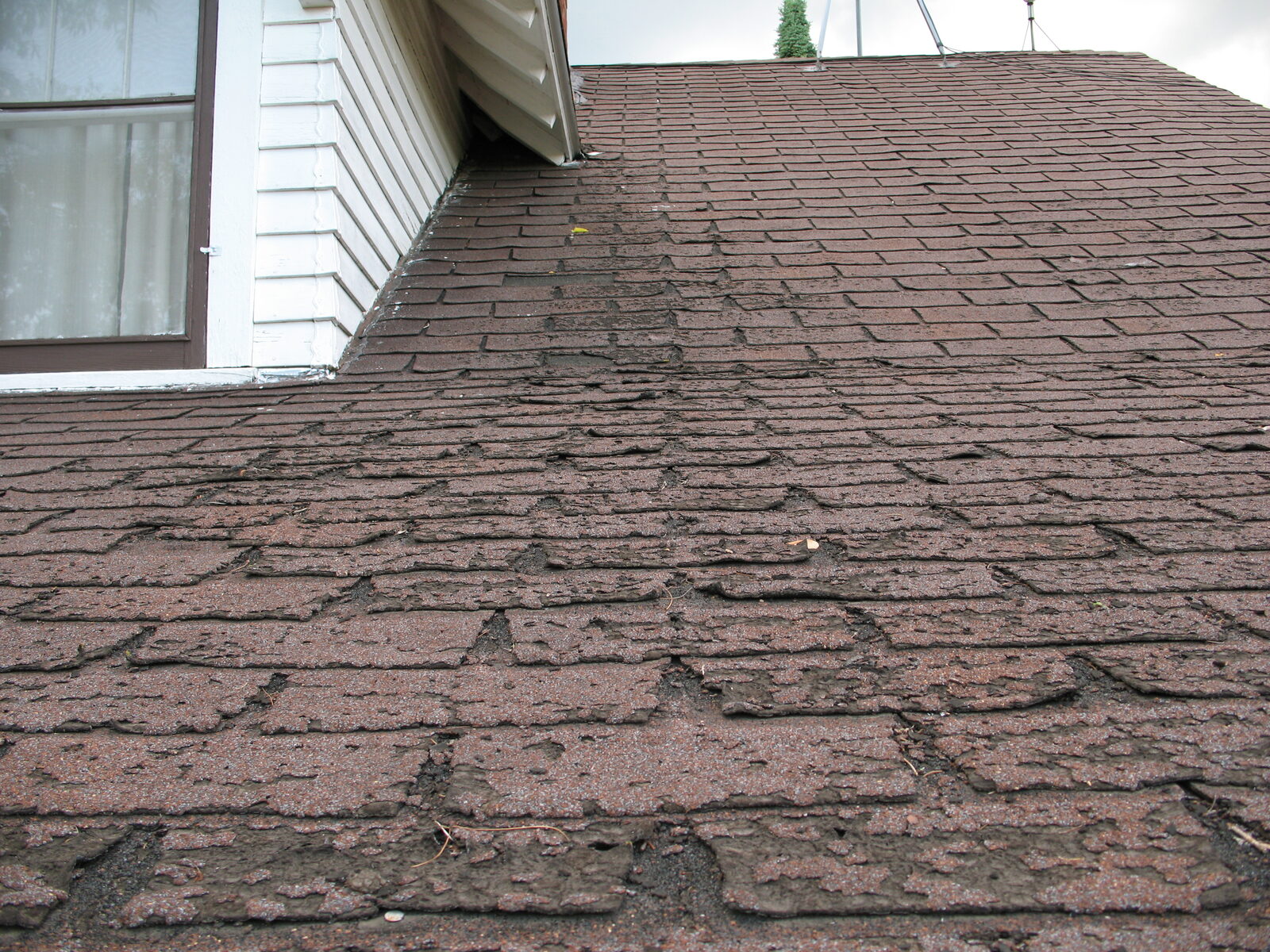
Granule loss in the gutters, shingles curling at the edges, and daylight visible through the attic decking are the obvious ones. We’ve written a longer breakdown of what to actually look for at signs you need a new roof, so we won’t repeat it here. Worth noting: if you’re already deciding between repair and full replacement, it helps to know roughly what a new roof costs before that conversation starts, not after a contractor’s already standing in your driveway. See how much a new roof costs for real ranges.
Wondering how much life your roof has left?
We’ll get up there, check the wear, and give you a real estimate of its remaining years. Free, and no pressure to do anything about it today.
Get My Free Roof Check Call (855) 556-6337Questions?
Roof lifespan, common questions
How long is a roof good for?
Roughly 15 to 30 years for asphalt shingle, the material on most homes, and well beyond that for metal, slate, or tile. “Good for” is doing a lot of work in that question though. A roof past its material’s typical range isn’t automatically failing, and one well inside the range isn’t automatically fine. Age is a starting clue, not the answer.
How long can a roof last?
On the far end, a well-installed standing-seam metal or slate roof can pass 75 years and keep going. Most homeowners will never own a roof that old; it’s more of a ceiling than a realistic planning number.
What’s the average roof lifespan?
Around 20 to 25 years across all the roofs we replace, since asphalt shingle dominates the market. That average hides a wide spread. We’ve torn off 12-year-old roofs and 32-year-old roofs made of the same shingle, on houses two doors apart. Install and ventilation explain most of that gap and we honestly can’t always tell you exactly why from the ground.
Does roofing material lifespan actually matter more than installation?
Installation usually matters more, up to a point. A premium material with a rushed install will underperform a mid-grade material put on correctly. That said, material still sets the ceiling: no install quality turns a 3-tab shingle into a 50-year roof. Think of material as the ceiling and install as how close you get to it.
Why homeowners trust us
Proven, certified, and rated
4.2★ on Google
GAF Master Elite™
1,400+ roofs completed
How many years does your roof have left?
Find out with a free roof check. We'll tell you where it stands and roughly how long you've got, no pressure to replace anything today.