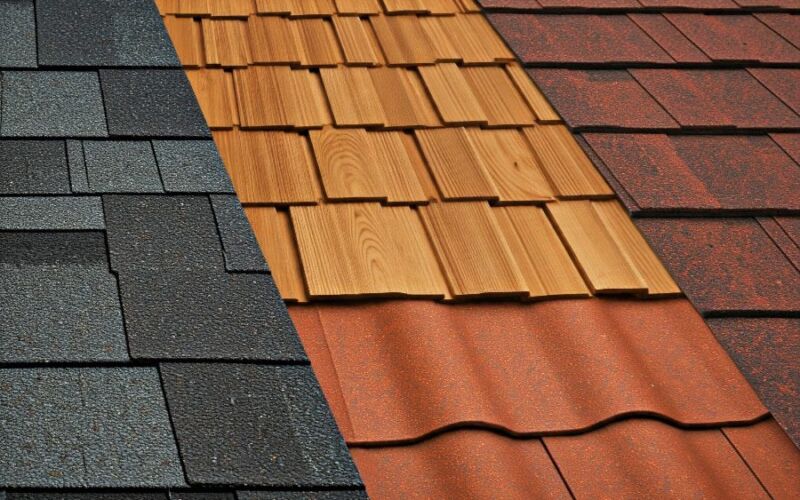
I’m going to be upfront about something: most articles about energy efficient roofing are written for climates that don’t look anything like ours. The numbers they cite, the savings they promise, the products they recommend. All of it assumes you’re trying to keep a house cool in Phoenix or Tampa. If you live in Delaware, southeast PA, or southern New Jersey, your energy picture looks nothing like theirs, and most of that advice either doesn’t apply or applies at about a quarter of the intensity they’re suggesting.
That’s not to say roofing choices don’t affect your energy bills. They do. But the single biggest energy efficiency decision on your roof has almost nothing to do with which shingle you pick.
Your Climate Isn’t Arizona’s
Delaware averages roughly 4,800 heating degree days per year versus about 1,100 cooling degree days. That’s a 4-to-1 ratio of heating demand over cooling demand. We spend four months trying to keep heat out and eight months trying to keep it in.
Most energy efficient roofing products are designed to reflect solar radiation. They bounce sunlight away from your roof, which reduces cooling loads in summer. That’s real and measurable. But when heating dominates your annual energy spend by that kind of margin, a product that only helps during the cooling season is working for you maybe 30% of the year.
I bring this up because I’ve had homeowners come in expecting reflective shingles to cut their energy bill by 20-40%. They read that number somewhere. That number comes from studies done in cooling-dominated climates where air conditioning runs eight months a year. In our market, a more realistic expectation for cool roof shingles is a 5-12% reduction in cooling costs specifically. Not total energy costs. Cooling costs. For a household spending $800-$1,200 a year on summer electricity, that works out to $50-$120 in annual savings.
Not nothing. But not what a lot of marketing copy implies.
The Bigger Lever: Attic Ventilation and Insulation
If you asked me to rank the three things that affect your roof’s energy performance, it would go: insulation, ventilation, then shingle choice. In that order, and it’s not close.
Why Insulation Matters More Than Shingle Color
Delaware energy code requires R-30 insulation for new roof installations. Walk into the attic of a home built before 1990 in Middletown or Bear and you’ll often find R-13 or less. Sometimes it’s patchy blown-in cellulose that’s settled and compressed over 30 years. Sometimes it’s pink fiberglass batts with gaps you could fit your hand through.
Going from R-13 to R-30 can cut heat loss through your ceiling by more than half. In a heating-dominated climate, that does more for your annual energy bill than any shingle product on the market. It’s not glamorous. Nobody’s going to photograph your attic insulation for a before-and-after. But if you’re spending money to make your roof more energy efficient and you don’t address insulation first, you’re putting the cart so far in front of the horse that the horse can’t even see the cart anymore.
We always check insulation depth and condition during roof inspections. If we’re tearing off your roof anyway and the insulation is inadequate, that’s the time to address it because the attic is already accessible.
Attic Ventilation
A properly ventilated attic with balanced ridge and soffit vents can reduce peak attic temperatures by 30 to 40 degrees in summer. An unventilated attic on a 95-degree day hits 150°F or more. That heat radiates down through the ceiling into your living space, and your AC fights it all day.
Adequate ventilation also prevents ice dams in winter and extends your roof’s lifespan by keeping the shingle temperature more consistent. Your shingles take less thermal stress, your decking stays drier, and your insulation performs better because it isn’t baking.
The IRC requires 1 square foot of net free ventilation per 150 square feet of attic floor (or 1:300 with balanced intake and exhaust). Most homes we inspect fall short. We’ve pulled off old roofs and found ridge vents with no corresponding soffit intake, which is like installing an exhaust fan in a sealed room. Air has nowhere to come from, so the vent does nothing.
I spend more time talking about ventilation than any single product because it affects everything: energy bills, roof lifespan, ice dams, moisture in the attic. You can put the most reflective shingle on the market up there and if your attic ventilation is wrong, you’ve got an expensive shingle baking in a 150-degree oven.
Cool Roof Shingles: A Realistic Look
That said, cool roof shingles are a real product category with real (if modest) benefits. Two options worth knowing about:
GAF Timberline CS (Cool Series)
GAF’s cool roof shingle uses specially coated granules that reflect more solar energy than standard-colored granules. They’re ENERGY STAR rated, which I’ll explain in a minute. In lighter colors, they achieve a solar reflectance index that qualifies for cool roof programs. They install identically to standard Timberline HDZ, so there’s no labor premium. The material premium runs about $0.50 to $1.00 per square foot over standard Timberline.
On a 2,000-square-foot home with roughly 2,300 square feet of roof surface, that’s $1,150 to $2,300 in added material cost. Against annual cooling savings of maybe $80 to $120, you’re looking at a 10-to-20-year payback period on the shingle premium alone. The math isn’t terrible, but it’s not compelling either unless you’re also choosing the color you would have picked anyway.
One detail worth knowing: cool shingles run cooler on the roof surface, which reduces thermal cycling and can add a couple of years of shingle life. That’s harder to put a dollar figure on, but it’s a real benefit we’ve observed.
Owens Corning makes a Cool Color Collection with similar reflective granule technology. Performance is comparable. Pick whichever manufacturer your contractor installs, because the installation quality matters more than the granule chemistry. If your contractor is a GAF Master Elite installer like us, the Timberline CS paired with a Golden Pledge warranty is a solid combination since you’re getting the reflective benefit plus the best warranty in residential roofing.
Metal Roofing and Energy Performance
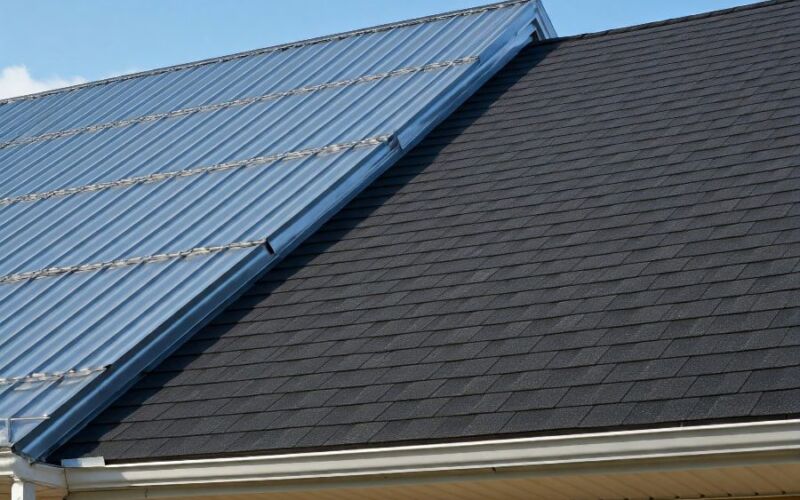
Metal roofing is the one product category where the energy efficiency argument holds up, even in our climate. National data shows 20-40% reductions in cooling costs for reflective metal roofing. Even in a heating-dominated climate like ours, the combination of reflective coatings and the air gap between metal panels and decking (on battened installations) provides meaningful thermal performance year-round.
Standing seam metal with a light-colored Kynar finish reflects a significant percentage of solar radiation and re-emits absorbed heat faster than asphalt. In summer, that translates to measurable cooling savings. In winter, the benefit is less direct, but metal’s ability to shed snow quickly means less ice dam potential and more consistent attic temperatures.
The cost is the barrier. Metal roofing runs $16,000-$32,000 for a typical Delaware home versus $10,000-$16,000 for architectural shingles. If energy savings are $300-$500 per year (realistic for our climate), the energy payback alone doesn’t justify the premium. You’d need to factor in the 40-to-60-year lifespan, low maintenance, and resale value to make the numbers work. Most people who choose metal do it for durability first and energy performance second. That’s the right order of priorities.
What ENERGY STAR Means on a Roof
ENERGY STAR certification for roofing products has specific criteria: the product must meet minimum solar reflectance and thermal emittance values. For steep-slope roofing (standard pitched residential roofs), that means an initial solar reflectance of 0.25 or higher and a thermal emittance of 0.75 or higher.
In plain terms: the surface reflects at least 25% of incoming solar energy and efficiently releases the heat it does absorb. Standard dark asphalt shingles reflect about 5-15% of solar energy. An ENERGY STAR rated cool shingle reflects 25-40%.
The certification is legitimate and the testing methodology is sound. Where it gets misleading is in the implied savings. The ENERGY STAR label was designed primarily for cooling-dominated climates. The program’s own guidance says the benefits are greatest in hot climates with high cooling demand. Our climate qualifies as “mixed” at best, and the program’s savings estimates need to be adjusted downward for our region.
I’m not saying skip the ENERGY STAR shingle. If you’re buying a new roof anyway, the premium is modest and the slight benefit is real. Just don’t expect it to transform your energy bill.
The Recommendation
If you came here expecting me to tell you that a specific shingle is going to slash your energy costs, I’m sorry to disappoint. What I’d tell a friend:
Spend your money on insulation and ventilation first. If your attic insulation is below R-30 (and in older homes in our area, it almost certainly is), getting it up to code will do more for your energy bills than the fanciest cool roof shingle on the market. Proper soffit-to-ridge ventilation is the next priority. Together, those two improvements can cut your heating and cooling costs by 15-25%.
After that foundation is solid, a cool roof shingle or reflective metal roof is a reasonable add-on, not a substitute.
For most homeowners looking at a standard asphalt shingle replacement in the $10,000-$16,000 range, the cool shingle upgrade is worth considering if the color works for your home and the payback timeline doesn’t bother you. For homeowners planning to stay long-term and weighing the metal vs. asphalt decision, the energy story tips the scale slightly more toward metal, though durability is still the stronger argument.
(Tangent that’s been bugging me for a while: the roofing industry loves to talk about energy efficiency as a selling point for premium products, but nobody in the supply chain seems interested in telling homeowners that a $200 improvement to their soffit ventilation would outperform a $2,000 shingle upgrade. The incentives are just pointed the wrong way. We try to have that conversation during inspections, but I can’t pretend the industry broadly does.)
FAQ
Do cool roof shingles work in cold climates?
They work, but the benefit is limited to the cooling season. In a climate like ours where heating demand outpaces cooling 4-to-1, the annual energy impact is modest. Some roofing industry folks worry that reflective shingles could slightly increase heating costs in winter by reflecting useful solar heat gain. I’ve seen that argument made but never seen convincing field data for it in residential applications. Probably a wash.
How much do energy efficient shingles cost compared to standard?
$0.50 to $1.50 per square foot more. On a typical home, that’s $1,000 to $3,500 in total added cost. The range depends on the product line and color you’re comparing against.
Is a metal roof more energy efficient than shingles?
Yes. Reflective metal roofing outperforms asphalt shingles on every energy metric: solar reflectance, thermal emittance, longevity of reflective properties. The gap is real. Whether it justifies the 2x cost premium depends on your timeline and priorities. Energy savings alone won’t cover the price difference in most cases.
What is the most energy efficient roofing material?
Cool-coated standing seam metal in a light color. If you’re talking shingles specifically, ENERGY STAR rated products like GAF Timberline CS or Owens Corning’s Cool Color Collection. But the material is less important than the system: insulation, ventilation, and a quality installation together outperform any single product choice.
Does ENERGY STAR roofing qualify for tax credits?
This changes frequently and I’d rather not give you outdated information. As of early 2026, certain energy efficient roofing products can qualify under the federal energy efficiency tax credit (Section 25C), but the specifics on which products qualify and the credit amounts have been revised multiple times. Check with your tax advisor or energystar.gov for current eligibility. We can tell you whether a specific product is ENERGY STAR certified, but tax credit advice is above our pay grade.
How much can I save with an energy efficient roof?
In the Mid-Atlantic, realistically $50-$150 per year on cooling costs for cool shingles, $200-$500 per year for reflective metal roofing. Those numbers assume adequate insulation and ventilation are already in place. If your attic insulation is R-13 in a house that should be R-30, fix that first and your savings from the insulation alone will dwarf anything the roofing material contributes.
Get Your Roof and Attic Assessed
If you’re thinking about energy efficiency during a roof replacement, we’ll evaluate your full system: shingles, ventilation, insulation depth, and soffit airflow. Sometimes the best energy upgrade isn’t a new roof at all.
We serve Delaware, southeast PA, and southern New Jersey.