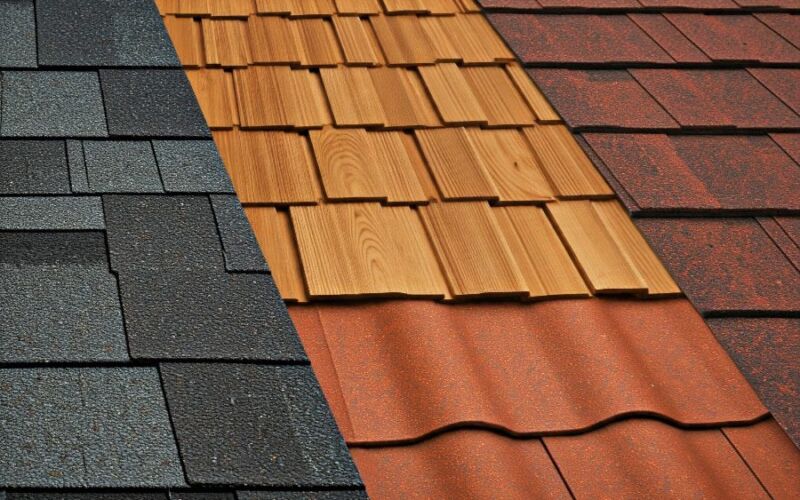
I’m going to save you some reading: for most homeowners in our service area, architectural asphalt shingles are the better choice. Not because metal roofing is bad. It’s a great product. But the math, the installer availability, and the way most people use their homes all point toward shingles unless you’re in one of a few specific situations.
We install both. We profit from both. This isn’t a sales play for one product over another. But when someone calls and says “I’m thinking about metal,” the conversation almost always ends with them going asphalt once we walk through the numbers together.
The Cost Gap Is Bigger Than People Expect
Most homeowners start looking at metal roofing because they’ve heard it “lasts forever” and they figure the higher upfront cost pays for itself. Sometimes that’s true. Often it isn’t.
For a typical 2,000-square-foot home in Delaware:
| Material | Installed Cost Range |
|---|---|
| Architectural asphalt shingles | $6,000–$15,000 |
| Corrugated/ribbed metal | $10,000–$18,000 |
| Standing seam metal | $22,000–$30,000 |
That standing seam number surprises people. They see metal roofing advertised and imagine something in the $12,000 range. What they’re picturing is exposed-fastener corrugated panels, which is a different product with a different lifespan and a different set of problems. Standing seam, the metal roof that delivers on the “lasts 50 years” promise, costs two to three times what a shingle roof does.
And those are material-plus-labor numbers, not just material. Labor is where the gap widens. In our area, metal roofing specialists bill around $94/hour compared to $78 for shingle crews. Part of that is skill premium. Part of it is supply and demand: there just aren’t that many qualified metal installers working in Delaware and South Jersey. You’re pulling from a smaller pool, and the good ones stay busy.
The 50-Year Math
The lifetime cost argument for metal goes like this: a metal roof lasts 40-70 years. An asphalt roof lasts 25-30. So you’ll need two asphalt roofs in the time you’d need one metal roof, making them roughly equal over a half century.
The math is rougher than I’d like because there are a lot of assumptions baked in. But let’s try.
Asphalt scenario over 50 years: First roof at $12,000. Second roof at year 27ish, which at 2% annual material inflation is around $16,000-$18,000. Total: roughly $28,000-$30,000 in nominal dollars. You also get two chances to inspect and replace the decking, underlayment, and flashing, which has value.
So yes, the numbers converge over 50 years. But that analysis only works if you stay in the house for 50 years, which almost nobody does. The average homeowner moves every 13 years. If you’re selling at year 12, you spent an extra $14,000 on a metal roof and you’re recovering maybe $5,000-$8,000 of that in resale value. Metal roofs do help resale, but not dollar-for-dollar.
Energy savings deserve a caveat
You’ll read that metal roofs reduce cooling costs by 20-40%, saving $300-$600 per year. Those numbers come from studies, and I don’t doubt the lab results. But they’re measuring reflective metal panels over properly ventilated attics in controlled conditions. In the real world, your savings depend on attic insulation, whether the metal has a reflective coating (bare metal without a cool-roof coating isn’t much better than dark shingles), and how much you’re spending on AC in the first place.
In Delaware’s climate, where heating costs outweigh cooling costs for most of the year, the energy argument is weaker than it is in Texas or Florida. I’ve never had a customer tell me their energy bill dropped noticeably after a metal roof install. That doesn’t mean it doesn’t happen. It means I can’t verify it from our own customer base.
When Metal Does Make Sense
I’m not anti-metal. There are situations where it’s clearly the right call.
Coastal properties in Sussex County
Salt air eats things. Asphalt shingles handle coastal exposure reasonably well, but metal, specifically aluminum standing seam, handles it better. The caveat is that you need aluminum, not steel. Galvanized steel corrodes in salt air environments, and we’ve seen it happen fast. Five to eight years and you’re looking at rust streaks. Aluminum or Galvalume-coated steel are the coastal options, and aluminum is the safer bet if you’re within a few miles of the water.
The irony is that coastal homes are where metal costs the most, because aluminum panels are pricier than steel and the specialized labor to install them near the coast is hard to find locally.
Low-slope sections
Any roof section below about 3:12 pitch is a headache with shingles. Water moves slowly, sits longer, finds its way under tabs. Metal handles low slope beautifully because standing seam panels have no exposed fasteners and the seams lock mechanically. If your home has a low-slope addition or porch roof that keeps giving you problems, metal on that section (even with shingles on the rest) is a smart hybrid approach.
20+ year homeownership
If you bought your forever home, you’re 45, and you’re not moving, the lifetime math starts working in metal’s favor. You avoid the disruption and cost of a second roof replacement entirely. One install, done.
Where Metal Falls Short for Most People
Beyond the cost, there are practical issues that don’t show up in comparison charts.
Noise. Standing seam with proper underlayment and attic insulation isn’t much louder than shingles during rain. But it is louder. People who tell you metal roofs are “just as quiet” haven’t sat under one during a Delaware thunderstorm. With solid decking, quality underlayment, and good insulation, the difference is minor. On an open-framed structure like a porch roof or detached garage? You’ll hear it.
Repairs are harder. If a tree branch dents a standing seam panel, you can’t just pop out the damaged piece. The interlocking panels often mean pulling multiple panels to access the damaged one. A shingle repair after storm damage takes a couple of hours. A standing seam repair might take a full day, if you can find someone to do it. We’ve written about how long different roof materials last and the maintenance profile for each, and metal’s durability advantage shrinks when you factor in repair complexity.
And there’s the installer problem. We do metal work, but we’re honest about the fact that asphalt shingle installation is our bread and butter. It’s what we do five days a week. Metal work requires different tools, different training, different flashing techniques. The crew that’s excellent at shingles isn’t automatically excellent at metal. In the Delaware and South Jersey market, the number of contractors who do truly high-quality standing seam work is small. You’re looking at longer lead times, higher quotes, and fewer options if something goes wrong. The Philly-adjacent labor market means the good metal guys have plenty of work in the city and suburbs. Convincing them to drive to Dover or Lewes adds to the cost.
(Side note: we quoted a standing seam job in Rehoboth last year where the homeowner had gotten four other quotes. Two of the contractors admitted during the sales visit they’d be subcontracting the metal work to a crew from Pennsylvania. Nothing wrong with that necessarily, but the homeowner thought they were hiring a local company and getting a local crew. Worth asking about.)
What About Corrugated or Ribbed Metal?
This is the budget metal option, and it’s a different conversation entirely from standing seam. Exposed-fastener metal panels cost $10,000-$18,000 installed, which is much closer to asphalt territory. But the lifespan is closer too: 25-40 years, not the 50-70 that standing seam delivers.
The exposed fasteners are the weak point. Each screw penetration has a rubber washer that seals against the panel. Those washers degrade over time. In 15-20 years, they can crack, compress, or back out slightly, and every one becomes a potential leak. We see this constantly on agricultural buildings and older additions.
If you’re considering metal for the aesthetic and want to stay under $20,000, corrugated is an option. Just don’t expect it to outperform architectural shingles by enough to justify even the moderate cost difference.
Our Recommendation
For a standard residential roof in Delaware, New Jersey, or eastern Pennsylvania: go with architectural asphalt shingles. Specifically, GAF Timberline HDZ or equivalent. Paired with proper underlayment, ice and water shield at all vulnerable points, and a contractor who follows manufacturer specs, you’re getting 25-30 years of performance at a fraction of the metal cost.
If you’re in a GAF Master Elite contractor’s service area (we’re one of them), you can get Golden Pledge warranty coverage: 50-year materials, 25-year workmanship, backed by GAF. That warranty protection on a $12,000 roof is better than most people get on a $26,000 metal roof, where the warranty is only as good as the installer who wrote it.
Put the $14,000 you saved into the house. New insulation, better attic ventilation, a roof replacement fund for when the shingles do eventually need replacing. You’ll come out ahead.
Metal roofing is a great product for the right situation. For most situations around here, it isn’t the right one.
FAQ
Is a metal roof worth it in Delaware? For most homes, no. The cost premium doesn’t pay off unless you’re staying 20+ years or you have specific conditions (coastal exposure, low-slope sections) that make metal the better technical choice.
How long does a metal roof last compared to shingles? Standing seam metal: 40-70 years. Architectural asphalt shingles: 25-30 years. But standing seam costs two to three times more upfront, so the per-year cost is roughly similar. We break down lifespan numbers for all materials in our roof lifespan guide.
Can you put a metal roof over existing shingles? Technically yes. Some contractors do it. We don’t recommend it. You’re trapping the old layer, hiding any decking damage underneath, and creating a surface that’s harder to inspect. Full tear-off is the right way to do it.
Does a metal roof increase home value? Studies say 1-6% increase in home value. In our experience, it helps in higher-end neighborhoods where buyers expect premium materials. In a typical subdivision, buyers don’t pay a proportional premium for metal. You won’t recoup the full cost difference at resale.
Are metal roofs loud when it rains? Louder than shingles, yes. How much louder depends on whether there’s solid decking underneath, what underlayment was used, and your attic insulation. On a properly built residential install with all those layers, the difference is noticeable during heavy rain but not unbearable. On a porch roof or garage with open framing, bring earplugs. That’s only half a joke.