I write roofing estimates almost every day. I know what goes into a good one because I build them line by line, and I know what’s missing from bad ones because homeowners bring me competitors’ quotes all the time. The generic advice out there is “get three quotes and compare.” Fine. But if you don’t know what you’re looking at, three bad quotes are just three bad quotes.
This is what a roofing estimate should look like from the other side of the table, what’s supposed to be on it, what’s usually missing, and how to tell a thorough bid from one that’s going to cost you later.
What a good estimate includes
A professional roofing estimate is an itemized document. If someone hands you a quote that says “Remove and replace roof: $11,000” and nothing else, you don’t have an estimate. You have a number on a piece of paper. That single line tells you nothing about what materials they’re using, how they’re handling your old roof, whether permits are included, or what happens when they pull up a shingle and find rotten decking underneath.

It should break out at minimum:
Materials, listed by product. Not “shingles” but the actual manufacturer and product line. GAF Timberline HDZ, CertainTeed Landmark, Owens Corning Duration. The color. Underlayment type. Starter strips, ridge caps, and whether they’re from the same system as your field shingles (matters for warranty eligibility).
Tear-off and disposal
Is the old roof coming off, or going over it? Two layers is the legal max in most jurisdictions, but layering masks problems and adds weight. The estimate should state whether tear-off is included, how many existing layers they expect, and where the debris goes. Dumpster rental, disposal, cleanup: all accounted for somewhere.
Labor. This doesn’t need to be separated by task, but it should exist as its own line. When labor is buried inside a single total, you can’t compare it meaningfully across bids.
Permits
Your estimate should include permit costs or explicitly state they’re not included. In New Castle County, a roofing permit runs around $150. Kent and Sussex are similar. It’s not a huge line item, but contractors who skip permits are usually cutting other corners too. If the estimate doesn’t mention permits at all, ask.
Decking repair contingency. This is the big one. Nobody knows the exact condition of your decking until the shingles come off. A good estimate includes a per-sheet price for plywood replacement ($50 to $100 per sheet in our area) so you’re not surprised on install day. We quote this as a contingency: if we find rot, this is what each sheet costs. If the decking is solid, you don’t pay it. We’ve pulled off roofs where four or five sheets needed replacing, adding $200 to $500. Not catastrophic, but if it’s not priced ahead of time, it becomes an argument at the worst possible moment.
Warranty details. What’s covered, how long, by whom. There’s a real difference between a contractor’s two-year workmanship warranty and a manufacturer-backed warranty that survives if the company closes. As a GAF Master Elite contractor, we offer the Golden Pledge warranty (50-year materials, 25-year workmanship, backed by GAF). But the point is your estimate should spell out what warranty you’re getting. If it doesn’t mention warranty at all, that tells you something.
How contractors measure your roof
Two approaches, and I have opinions about both.
Satellite measurement is the industry default now. Services like EagleView and GAF QuickMeasure use aerial imagery to generate a 3D model of your roof with measurements, pitch, and waste factors. Takes about an hour to get a report back. Accuracy is usually within 2-3% of physical measurement, which is fine for most homes.
Where it falls short: complex rooflines, recent additions, and heavy tree cover. I’ve had satellite reports miss an entire dormer on a house in Bear because the angle made it look like a shadow. Not common, but it happens.
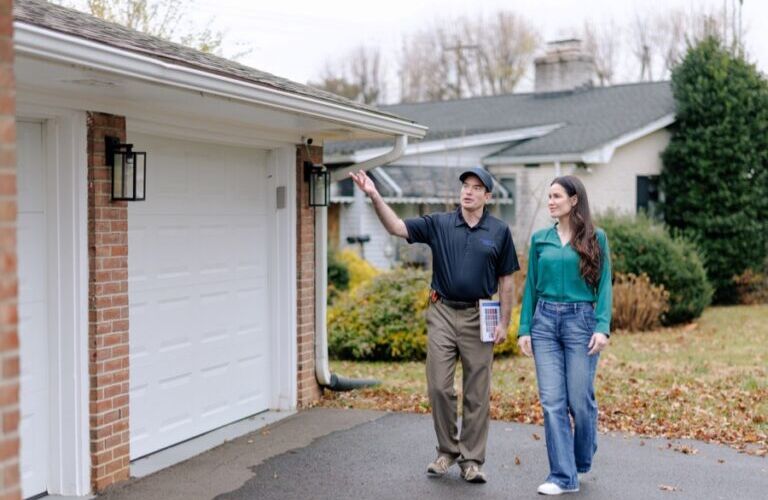
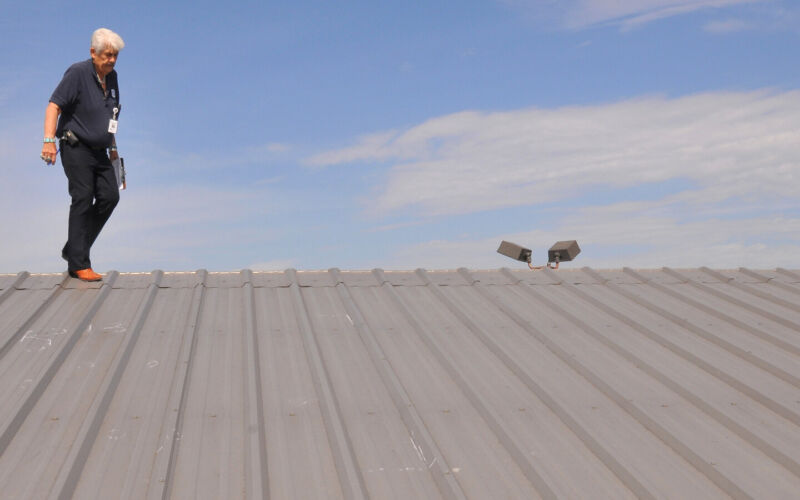
On-site measurement catches what satellites miss. Walking the roof shows you soft spots, failing pipe boots, previous patch jobs. We use satellite as the starting point and verify on-site before finalizing. If a contractor quotes your job entirely from a satellite report without visiting, they’re guessing on too many variables.
Why your three quotes don’t match
You called three contractors. You got quotes of $10,800, $13,200, and $16,400. Nobody’s necessarily lying. They’re probably making different assumptions about the same roof.
Pitch is the most common source of disagreement. One contractor estimates your pitch at 6:12 from the ground (walkable, standard labor rate). Another measures it at 8:12 (steep, needs harnesses, slows the crew by 30%). That alone swings a quote by $1,500 to $3,000. We have a full breakdown of how roof costs work in Delaware if you want the pricing math behind this.
Existing layers: if one contractor plans to tear off one layer and another suspects two, the second bid includes more labor and disposal. Ask.
Flashing scope varies wildly between bids. Some contractors include full re-flashing of all penetrations in their base price. Others price it as an add-on, or plan to reuse your existing flashing without telling you. Reusing 20-year-old step flashing around a chimney is asking for a leak within five years.
Then there’s decking. Contractor A priced a contingency for four sheets. Contractor B assumed zero issues. Contractor C didn’t mention it. On paper, B looks cheapest. On install day, that changes fast.
The chimney flashing problem
If I could tell homeowners to check one thing on every estimate they receive, it would be this: is chimney flashing priced as a line item?
Chimney flashing is the most commonly omitted item on roofing estimates, at least in our market. I can’t say for sure that’s true nationally, but around here it’s $350 to $800 depending on chimney size and configuration, and a surprising number of contractors leave it off entirely. Sometimes they plan to reuse the old flashing (bad idea). Sometimes they plan to do it but didn’t price it (which means they’ll either eat the cost and cut corners elsewhere, or surprise you with an add-on mid-job). Sometimes they just forgot.
Last year a homeowner in Middletown showed me three estimates for the same roof. Two of them had no mention of chimney flashing anywhere. The third, from a competitor we respect, had it clearly itemized at $625. That competitor’s total was $900 higher than the cheapest bid, but once you accounted for chimney flashing and a decking contingency (also missing from the cheap bid), the real difference was about $100. The “expensive” quote was the most thorough one.
We price chimney counter-flashing and step flashing as a separate line item on every estimate. If a contractor’s bid doesn’t mention your chimney at all and you have one, that’s not a cheap estimate. It’s an incomplete one.
Red flags
I won’t belabor this because some of it is obvious. Single line item with no breakdown (covered above). No permit costs. Verbal-only quotes: if it’s not written down, it doesn’t exist. No warranty section. No mention of decking.
The one worth expanding on: a price way lower than everyone else. I’m not going to tell you the cheapest quote is always bad. Sometimes a contractor has lower overhead or is filling a schedule gap. But if one bid is 30% below the others, something is being left out. Check it against everything in this article.
How many estimates should you get?
Three is the standard advice, and it’s fine. I’m not going to argue with three.
But the homeowners who get the best outcomes aren’t the ones who get the most quotes. They’re the ones who can read an estimate and ask informed questions. Two fully itemized estimates tell you more than five single-line-item bids.
If you’re comparing quotes, line them up: same scope of work? Same tear-off assumptions? Same flashing approach? Same decking contingency? Apples to apples with one contractor cheaper is useful information. Apples to question marks, the lower number is just noise.
When you call for an estimate, ask for it in writing and ask for an itemized breakdown. Any contractor who pushes back on that or acts inconvenienced by the request is telling you something about how they’ll handle problems on your project.
Getting your estimate from us
We provide free, itemized estimates across Delaware, southeast Pennsylvania, southern New Jersey, and northern Maryland. Every estimate includes material specs, labor, tear-off, permits, disposal, a per-sheet decking contingency, flashing, and warranty details. You get a written document you can compare line by line against any other bid.
If you’re not ready for an estimate but want to understand what roof repairs typically cost or what goes into an inspection, we’ve written about both. When you’re ready, call or fill out the form.
FAQ
Should I get an estimate before contacting my policy provider?
Yes. Your estimate gives you a baseline to compare against the adjuster’s assessment. We’ve seen adjusters miss chimney flashing and decking damage that were obvious during our inspection. Having your own documented numbers makes it much easier to push back.
How long does a roofing estimate take?
The on-site visit is usually 30 to 45 minutes. You’ll have a written estimate within 24 hours, sometimes the same day.
Do I need to be home for the estimate?
No.
Can I negotiate a roofing estimate?
You can ask. Most reputable contractors aren’t padding their numbers, so don’t expect big movement. If you’re flexible on timing (willing to let the crew fill a schedule gap), some contractors offer a discount. Bundling work sometimes helps too. But a contractor who drops $3,000 the second you push back probably had $3,000 of fluff in there to begin with.
What’s the difference between an estimate and a quote?
Most roofing companies use the terms interchangeably. What matters: does the document include a stated price, an itemized scope of work, and a note about what could change it (like decking condition)? If yes, you have something you can hold a contractor to. If not, you have a conversation, not a commitment.
How far apart should roofing quotes be?
Quotes from three competent local contractors usually fall within 15-20% of each other for the same scope of work. Wider than that, somebody’s making different assumptions or one bid is missing something. Pull them side by side and compare line items. The gap usually explains itself.