Your attic needs to breathe. That sounds like something a home inspector says to justify a $400 bill, but it’s one of the things we deal with constantly on roof replacements across Delaware and southeastern PA. Bad attic ventilation kills shingles from the inside, drives up cooling costs in summer, and creates ice dams in winter. Half the premature roof failures we see started in the attic, not on the roof surface.
The fix is usually straightforward and not that expensive. But it does require understanding what’s going on up there, because slapping a powered fan on your roof and calling it a day can make things worse.
Why Attic Ventilation Matters
Your attic sits between your living space and your roof. In summer, the sun heats your shingles to 150-170°F. Without airflow, that heat radiates down through your ceiling, and your AC works overtime to compensate. A well-ventilated attic stays within about 10-15°F of outside air temperature. A poorly ventilated one can hit 140°F or more on a 95°F day.
In winter, the problem flips. Warm air from your house leaks into the attic through gaps around light fixtures, plumbing stacks, and the attic hatch. That warm air hits the cold underside of the roof deck and condenses. You get moisture buildup, mold on the sheathing, and over time, rotting decking. We’ve torn off roofs where the plywood underneath was basically wet cardboard. The shingles looked fine from the ground.
Ice dams are the dramatic version of this. Warm attic air melts snow on the upper roof, water runs down to the cold eaves, refreezes, and backs up under the shingles. We see this every winter in northern Delaware and Chester County, PA. The root cause is almost always inadequate ventilation combined with poor attic insulation.
How Attic Ventilation Works
The concept is simple: cool air enters low (at the soffits/eaves), rises as it warms, and exits high (at the ridge or near the peak). This continuous flow pulls moisture and heat out of the attic space. No fans required in most cases. Physics does the work.
For this to function, you need two things: intake vents at the bottom and exhaust vents at the top. A lot of older homes in our area have one but not the other. We see houses with ridge vent installed during a reroof in 2008 but the soffits are still sealed shut with aluminum fascia from the 1970s renovation. The ridge vent does nothing without intake air feeding it.
The 1:150 Rule
Building code says you need 1 square foot of net free ventilation area for every 150 square feet of attic floor space. If your attic is 1,500 square feet, you need 10 square feet of total vent area. Split that roughly 50/50 between intake and exhaust. Some codes allow 1:300 if you have a vapor barrier on the warm side, but 1:150 is what we target. It’s not hard to hit on most houses, and going bigger doesn’t hurt.
Types of Attic Vents
Intake Vents (Bottom)
Soffit vents are the standard. They’re either continuous strips running along the eaves or individual vents punched into the soffit panels every few feet. Continuous soffit vents provide more airflow and are what we install on new construction and full soffit replacements. If your house already has individual soffit vents and they’re clear of debris, they’ll work fine.
The number one problem with soffit vents: insulation blocking them from the inside. Someone blows in cellulose or rolls out batts and covers the vent opening. Air can’t get in. We install foam baffles (also called rafter vents or vent chutes) between the rafters at the eave to keep a channel open above the insulation. They cost about $2 each and take five minutes per bay to staple in. When we do an insulation job, baffles are standard.
Exhaust Vents (Top)
Ridge vents run along the peak of the roof and are nearly invisible from the ground. This is what we install on virtually every reroof. They provide continuous exhaust along the entire ridge, which gives the most even airflow. GAF Cobra series or equivalent. They work with shingle-over installation, so they don’t look like an afterthought bolted to your roof.
Box vents (also called static vents or turtle vents) are the metal units dotted across a roof. You need 8-10 of them on a typical house to match ridge vent airflow, and each one is another roof penetration. We use them on hip roofs with short ridges where ridge vent alone isn’t enough.
Gable vents are the louvered openings on the gable ends of your house. They look like decorative features and they do provide some exhaust, but they’re not efficient. Air takes the path of least resistance, so gable vents tend to short-circuit: air enters one gable vent and exits the other, bypassing most of the attic. If you have ridge vent and soffit vents, gable vents become unnecessary. We sometimes recommend sealing them from inside to prevent wind-driven rain from entering.
Powered Attic Fans: Usually a Bad Idea
We get asked about powered attic ventilators constantly. The short version: they usually create more problems than they solve.
A powered fan creates negative pressure in the attic. If your ceiling has any air leaks (and every ceiling does), the fan pulls conditioned air out of your living space up into the attic. You’re now air-conditioning your attic while making your HVAC work harder downstairs. The energy cost of running the fan plus the extra AC load almost always exceeds whatever benefit the fan provides. The Department of Energy and most building science researchers agree on this.
Solar-powered versions are less problematic since you’re not paying for electricity. But they still pull conditioned air if your ceiling isn’t air-sealed. Fix the sealing and insulation first. Passive ventilation handles the rest.
Signs Your Attic Ventilation Needs Work
You don’t need a thermal camera to spot most ventilation problems, though we do carry one. Check for these:
- Upstairs rooms that are noticeably hotter than downstairs in summer, even with AC running
- Ice dams forming along the eaves in winter
- Mold, mildew, or dark staining on the underside of the roof sheathing (go up with a flashlight)
- Rusty nails poking through the sheathing (condensation is corroding them)
- Peeling or bubbling exterior paint near the roofline
- Shingles curling or aging unevenly, especially in the center of the roof vs the edges
- Your attic feels like a sauna in July. That one’s subjective, but if you can’t spend 30 seconds up there without sweating through your shirt, there’s a ventilation issue
How to Improve Your Attic Ventilation
Here’s what we do on most jobs, in order of priority:
1. Clear Blocked Soffit Vents
Go into the attic with a flashlight and look toward the eaves. Can you see daylight through the soffit vents? If not, insulation is probably blocking them. Pull back the insulation and install foam baffles to maintain an air channel. This alone can make a noticeable difference. Materials cost under $100 for most houses.
2. Add Soffit Vents if You Don’t Have Any
Some houses, especially those built before the 1960s or those with enclosed soffits from vinyl siding jobs, have zero soffit ventilation. Retrofitting continuous soffit vent strip is a half-day job for a siding crew. The cost runs $400 to $1,200 depending on how many linear feet of soffit need cutting. We do this regularly as part of siding replacement projects.
3. Install or Upgrade Ridge Vent
If you’re getting a reroof, ridge vent is a no-brainer. It’s included in our standard roof replacement package. If your roof is in decent shape but you have no ridge exhaust, a contractor can cut the ridge open and install ridge vent without replacing the whole roof. Expect $500 to $1,200 depending on ridge length. Don’t mix ridge vent with powered fans or you’ll create airflow conflicts.
4. Seal Air Leaks in the Attic Floor
This is the unsexy one that makes the biggest difference in winter performance. Caulk or foam around every penetration through the attic floor: wiring holes, plumbing vents, ductwork, recessed light housings, the attic hatch. Every gap is a channel for warm, moist air to enter the attic. Fifteen minutes with a can of spray foam and a caulk gun can cut your attic moisture load in half.
5. Don’t Forget Insulation
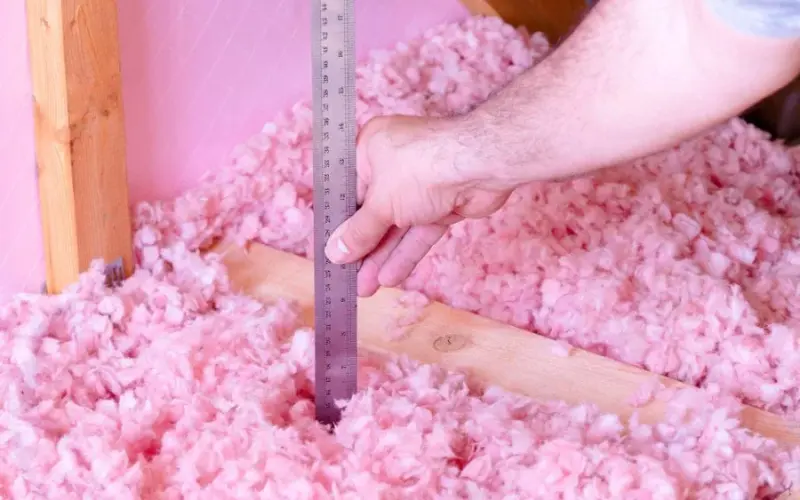
Ventilation and insulation are partners. Good ventilation with thin insulation means your attic breathes well but your house leaks heat (or cold). Good insulation with no ventilation traps moisture. You need both. Delaware code calls for R-49 in the attic, which is about 16-18 inches of blown fiberglass or cellulose. A lot of older homes have 6 inches or less. We wrote about the full picture in our energy-efficient roofing materials guide.
What Does It Cost?
Depends on what you need. Here’s a rough breakdown from jobs we’ve done in the last year:
| Improvement | Typical Cost |
|---|---|
| Install foam baffles (24-40 rafter bays) | $150 – $350 |
| Add continuous soffit vent (retrofit) | $400 – $1,200 |
| Install ridge vent (without full reroof) | $500 – $1,200 |
| Add box vents (4-6 units) | $300 – $600 |
| Attic air sealing | $300 – $700 |
| Comprehensive ventilation overhaul | $1,200 – $2,500 |
When we do a full roof replacement, ridge vent and proper intake are included. That’s not an upsell — it’s just how a roof system should be installed.
Common Mistakes
A few things we see go wrong on ventilation jobs, including work done by other contractors:
Mixing exhaust types. Ridge vent plus a powered fan fights itself. The fan creates a pressure differential that can pull air backwards through the ridge vent instead of letting it exhaust naturally. Pick one exhaust system and stick with it.
All exhaust, no intake. A ridge vent without soffit vents is just a slot in your roof. The air has no path to enter the attic from below, so the ridge vent pulls from wherever it can, including bathroom exhaust ducts and drywall cracks. Not what you want.
Venting into the attic. Bathroom fans and dryer vents need to exhaust to the outside, not into the attic. We find flex duct from bathroom fans just draped over a rafter about once a week. If your bathroom fan seems weak, go check where the duct terminates.
When to Call a Pro
Clearing soffit vents and sealing attic floor penetrations are reasonable DIY tasks. Cutting into your soffit or opening the ridge is contractor territory.
If you’re due for a roof replacement, that’s the time to handle all of this in one shot. Soffit, ridge vent, baffles, and insulation as part of the reroof scope, for less than doing each piece separately. We do free attic inspections for homeowners in Delaware, southeast PA, and southern New Jersey.