A storm rolls through, the wind dies down, and you walk outside to check on things. Maybe there’s a branch in the yard, some shingle grit sitting in the gutter downspout, or a hailstone-sized dent in the mailbox. Now you’re staring up at your own roof wondering if it took a hit too, and whether that even matters.
If you already have water actively coming through a ceiling or wall right now, stop here and go to our guide on dealing with a leaking roof instead. That’s an emergency. This article is for the more common situation: the storm has passed, nothing is visibly pouring in, but you suspect the roof was damaged and want to know what to look for, what to save for insurance, and when it’s worth calling someone out.
How to tell if your roof has storm damage
Wind and hail damage a roof in different ways, and they don’t always look the way people expect. Wind tends to leave obvious clues. Hail is sneakier.
Signs of wind damage on a roof
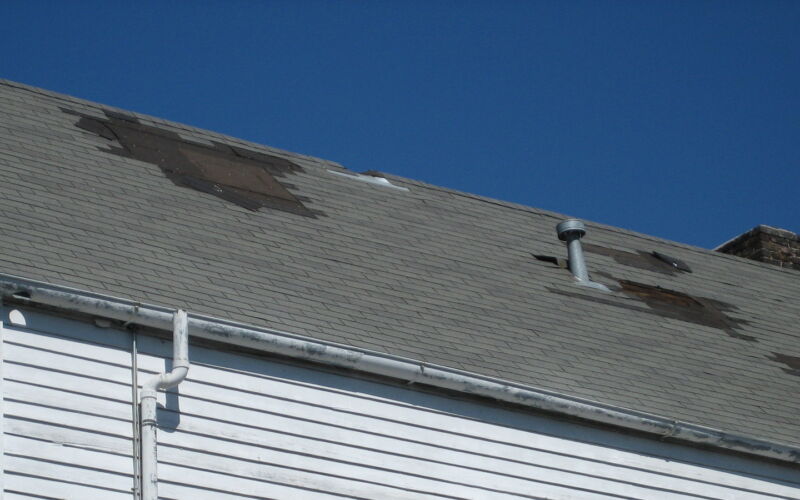
Strong gusts lift shingles at the edges, and once a shingle has been lifted it rarely seals itself back down the way it’s supposed to. From the ground, look for shingles that are creased, curled up at a corner, or missing outright, especially along roof edges, ridges, and around any chimney or vent where wind gets a grip. According to Owens Corning, meteorologists classify gale-force winds as roughly 39 to 54 mph and hurricane-force winds as 74 mph or greater, and either range is enough to lift a shingle that isn’t sealed well. Flashing, the thin metal that seals joints and edges, can also lift or bend without a single shingle going missing. If metal edges look slightly warped or pulled away from the roofline, that’s worth a photo.
Signs of hail damage on a roof
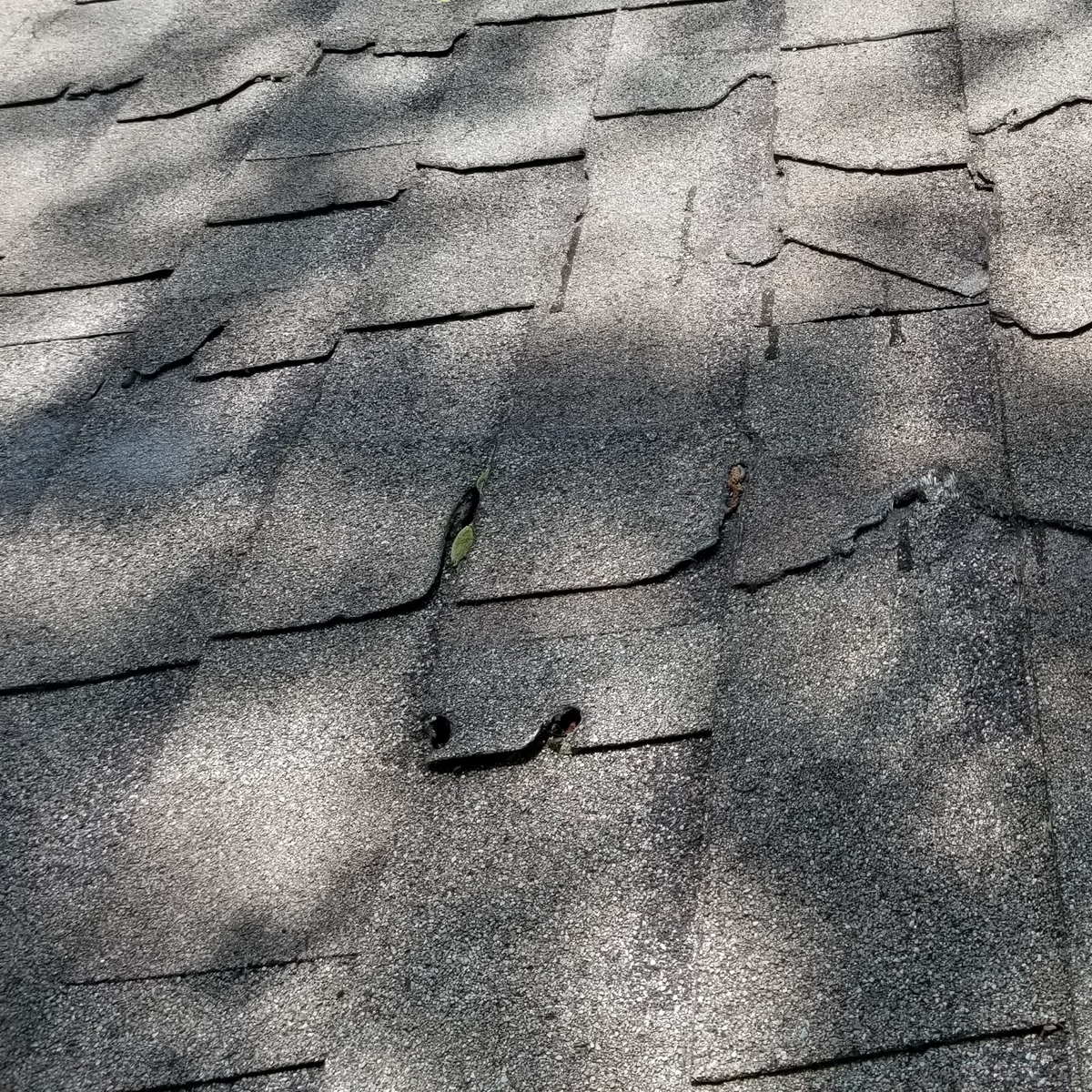
Hail is the one homeowners underestimate most, because a hailstone usually doesn’t punch a hole through a shingle. It bruises it. The impact crushes the shingle’s mat and knocks loose the protective granules in a small, round spot, and that spot can look like nothing from the street, sometimes nothing at all until an inspector gets up close. According to GAF, insurance adjusters typically assess hail damage using a “test square,” roughly a 10 foot by 10 foot section of roof, counting the number of hail hits inside it to judge severity. If your gutters have a noticeable amount of loose granules after a hailstorm, or you see denting on soft metal like gutters, downspouts, or an AC unit’s housing, there’s a decent chance the roof took a similar beating even if you can’t see it from below.
What you can safely check from the ground
Do not climb onto a roof that’s wet, or one you suspect is storm-damaged. A weakened deck or a loose shingle underfoot is exactly how a minor storm turns into a fall injury, and it happens every year. Walk the perimeter of your house instead. Look up at the roof edges and valleys with binoculars if you have a pair. Check the attic for new light coming through the roof deck or a fresh damp smell. Look at gutters and downspouts for granules, dents, or debris. That’s genuinely most of what a homeowner can and should do before calling anyone.
Storm damage vs. normal wear and tear
Not every rough-looking shingle is storm damage, and insurers know this too, which is exactly why some claims get pushback. A roof that’s fifteen or twenty years old is going to show curling, cracking, and granule loss on its own, storm or no storm. Our guide on signs you need a new roof covers what that ordinary aging looks like in more depth. The distinguishing question here is usually timing and pattern. Damage that shows up as a cluster right after a specific, documented weather event reads very differently to an adjuster than damage spread evenly across the whole roof with no clear cause. If your roof was already near the end of its life before the storm, expect more scrutiny on the claim, not less. That’s just how it goes, and it’s worth knowing going in rather than being surprised by it later.
How to document roof storm damage for your insurance claim
This is the part most guides gloss over. It’s usually the difference between a claim that gets paid promptly and one that drags on for months.
What to photograph and log
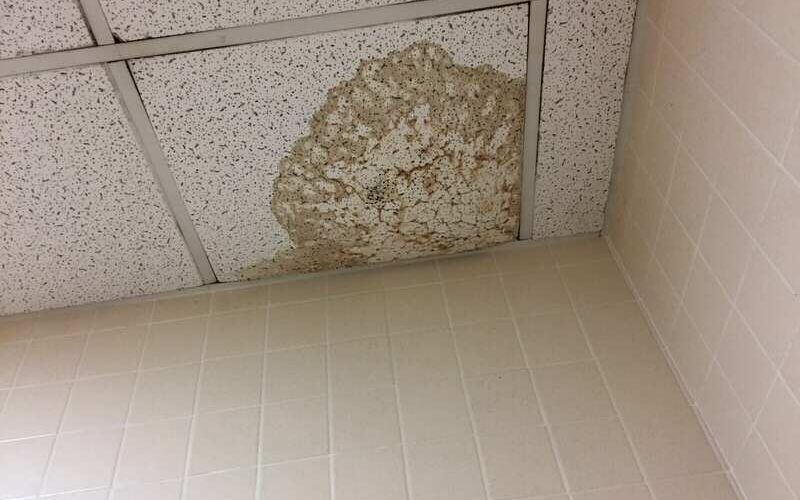
Write down the date and approximate time of the storm before the details get fuzzy. Take ground-level photos of the roof from multiple angles, plus close-ups of anything specific you noticed: missing shingles, dented gutters, debris on the lawn. Photograph interior signs too, a ceiling stain, a damp attic joist, even if it seems minor now. It’s also worth pulling a local weather report or news mention of the storm (hail size, wind speeds, the date) as corroborating evidence. Insurers weigh a documented event more heavily than a homeowner’s memory of “it was pretty bad out there.”
Replacement Cost Value vs. Actual Cash Value
Your policy pays out one of two ways. Replacement Cost Value covers what it actually costs to replace the roof today. Actual Cash Value subtracts depreciation for the roof’s age first, which usually means a smaller check. GAF’s guidance on this distinction is a useful gut check: know which one your policy uses before you’re mid-claim, because it changes what number you should expect to see.
Does homeowners insurance cover storm damage?
Usually, yes, in the sense that wind and hail are standard covered perils on most homeowners policies. But “usually” is doing a lot of work in that sentence. Deductibles, wind or hail-specific deductibles in some states, roof age limits, and maintenance requirements all vary by carrier and by policy, and we genuinely don’t know the specifics of yours. Nobody should tell you otherwise without reading your actual policy. Call your agent, ask directly whether storm damage is covered and what your deductible looks like for a wind or hail event, and get the answer in writing if you can.
When to call a professional roofer
Some situations don’t need a debate. Call a roofer if you see any interior sign of a leak, any missing or visibly torn shingles, or anything that looks like structural sag along the roofline. Also call if you’re just not comfortable getting on a ladder to look closer yourself, which is a perfectly reasonable place to stop. Given how often hail bruising is invisible from the ground, a roof that looks fine after a hailstorm isn’t automatically fine. A trained eye up close, working the same test-square approach adjusters actually use, is the only way to know for sure.
We offer Storm Damage Repair as a dedicated service across our DE, PA, NJ, MD, and VA service area, and a post-storm inspection is free with no pressure to move forward either way. If it turns out repairs are needed, our roof inspection cost and roof repair cost guides walk through what that typically runs. Request a quote and we’ll take it from there.
FAQ
How long do you have to claim roof damage from a storm?
It varies by state and by policy, sometimes by a lot, so there’s no single number here that would be accurate for every reader. Check your policy directly or ask your agent for the filing window. What we can say is that waiting rarely helps and sometimes hurts, since some carriers ask why you didn’t report sooner.
What does storm damage on a roof look like?
Missing, curled, or creased shingles from wind. Small, round bruised spots with granule loss from hail, often invisible from the ground. Bent or lifted flashing. Dented gutters, downspouts, or AC housing. Sometimes nothing visible at all until someone gets up close, which is exactly why hail damage in particular gets missed for months.
What to do if you have roof damage from a storm?
Document it, check what your policy covers, and get a professional inspection before deciding anything. Skip the ladder if you’re not confident on one.