Most roofs don’t fail on a specific date. They degrade slowly, then all at once during a storm that wouldn’t have been a problem five years earlier. So when someone asks “how long does a roof last,” the honest answer is: it depends on what’s up there, who installed it, and whether anyone’s bothered to maintain it since.
We replace roofs across Delaware, New Jersey, and Pennsylvania every week. Some are 30-year shingle roofs that gave out at 14 years because of bad attic ventilation. Others are 25-year-old roofs that still have life in them. The warranty number on the package is a starting point, not a guarantee.
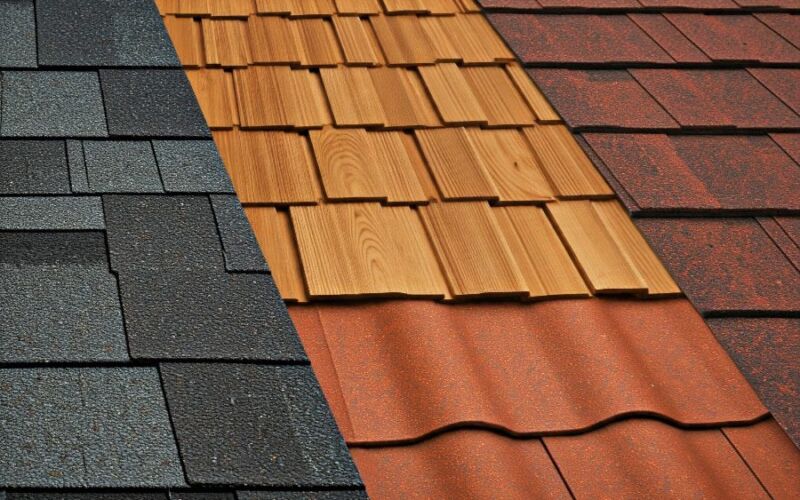
Average Roof Lifespan by Material
| Material | Expected Lifespan | Our Take |
|---|---|---|
| 3-Tab Asphalt Shingles | 15–20 years | Don’t bother on a forever home |
| Architectural Asphalt Shingles | 25–30 years | The sweet spot for most homeowners |
| Designer/Luxury Shingles | 30–40 years | Worth it if you’re staying put |
| Standing Seam Metal | 40–70 years | Excellent, but pricey up front |
| Corrugated Metal | 25–40 years | Depends heavily on gauge and coating |
| EPDM (Rubber, Flat) | 20–30 years | Fine for what it is |
| TPO (Flat) | 15–25 years | We have mixed feelings |
| Modified Bitumen (Flat) | 15–20 years | Older tech, still functional |
| Clay/Concrete Tile | 50–100 years | Rare in our service area |
| Natural Slate | 75–150 years | The gold standard, if your framing can handle it |
| Cedar Shake | 20–40 years | Beautiful but high maintenance |
| Synthetic Slate/Shake | 30–50 years | Jury’s still out on the long-term data |
One caveat worth mentioning: most lifespan ranges you’ll see online come from manufacturer testing and marketing literature. Real-world performance in the Mid-Atlantic, with our freeze-thaw cycles, coastal winds along Delaware’s shore, and humid summers, tends to land on the lower end of those ranges. We’ve adjusted the figures above based on what we actually pull off roofs around here, not what’s printed in the brochure.
How Long Do Asphalt Shingles Last?
Asphalt shingles are on roughly 80% of American homes. They’re what we install most, and what we know best. But lumping all asphalt shingles together is like saying “cars last 15 years” — a Civic and a base-model rental fleet sedan aren’t the same thing.
3-tab shingles are the flat, uniform-looking ones. They were the standard for decades. Realistically, you’re looking at 15 to 20 years, and in our area, we often see them start curling and losing granules around year 12 to 15. We don’t recommend them anymore. The cost difference between 3-tab and architectural shingles has shrunk so much over the last decade that it just doesn’t make sense to go cheap here. You’re saving maybe $1,500 to $2,500 on a typical home and giving up 10 years of roof life. Bad math.
Architectural Shingles
This is what most people should be putting on their home. Architectural shingles (also called dimensional or laminate shingles) have two or more layers of asphalt bonded together. They’re thicker, heavier, more wind-resistant, and they look substantially better than 3-tab.
GAF’s Timberline HDZ is what we install most. It carries a limited lifetime warranty, but “lifetime” warranties on shingles deserve some unpacking: they’re prorated after the first 10 years, and they only cover the material, not labor. So a “lifetime warranty” shingle that fails at year 18 might get you a partial credit on replacement shingles, but you’re still paying for the tear-off, the new underlayment, and the labor to reinstall everything. We’ve written about this more in our roof replacement cost article.
Realistically, a well-installed architectural shingle roof in our region lasts 25 to 30 years. We’ve seen some go longer on homes with great ventilation and lighter-colored shingles that don’t bake as much in summer. We’ve also seen them fail at 18 years on south-facing roofs with dark colors and zero attic airflow. Both outcomes are common enough that neither surprises us anymore.
The installation matters more than most people realize. A GAF Master Elite contractor can offer GAF’s Golden Pledge warranty, which actually does cover labor and materials for 25 years with no prorating on the material for that full period. That’s a real warranty. The same shingles installed by a guy off Craigslist get you none of that protection — and the shingles won’t perform any differently, but you’ll have zero recourse when something goes wrong.
Designer shingles like GAF Grand Canyon or Camelot are thicker again, with more dramatic shadow lines meant to mimic slate or cedar shake. 30 to 40 years is a reasonable expectation. They’re not twice as good as architectural shingles, but they look better and come with the best warranty options. If you’re in a higher-end neighborhood or plan to stay in your home for 20-plus years, they’re worth the conversation.
What Actually Kills a Roof Early
Ventilation
Bad attic ventilation is the number one reason we see roofs fail before their time. Not storms. Not defective shingles. Ventilation.
In summer, a poorly ventilated attic can hit 150°F. Your shingles are getting cooked from both sides — the asphalt dries out, becomes brittle, and starts cracking years before it should. In winter, warm moist air from your living space rises into the attic, condenses on the cold underside of the roof deck, and you end up with moisture damage, mold on the decking, and ice dams along the eaves.
We see this constantly on homes in South Jersey and Delaware where someone finished their attic or added blown-in insulation and covered the soffit vents in the process. Or homes where a roofer installed a new roof without checking whether the ridge vent was actually connected to open airflow. A ridge vent with no intake vents is useless — it’s like putting an exhaust fan in a sealed room.
The IRC calls for 1 square foot of net free ventilation area for every 150 square feet of attic floor space, or 1:300 with a properly balanced system. Most homes we inspect don’t meet this. If you’re not sure where yours stands, any roofer can evaluate the ventilation in about 20 minutes. We do it as part of our free inspection.
(Side note that has nothing to do with selling you anything: we once inspected a home in Wilmington where the previous roofer had installed the ridge vent upside down. Just backwards. The filter material was facing the sky and the open channel was pointing down into the attic. The homeowner had been chasing mystery leaks for three years. That wasn’t a leak. It was rain coming straight through an inverted vent. Three years of damp insulation and the previous roofer never figured it out.)
Installation Quality
A roof system has roughly 30 components working together. Shingles are just the visible part. Underneath there’s decking, synthetic underlayment or felt paper, ice and water shield in the valleys and along the eaves, drip edge, flashing around every penetration, starter strips, and ridge caps.
If any one of those components is skipped, installed wrong, or made from cheap materials, the whole system suffers. We’ve torn off 8-year-old roofs where the shingles were fine but the flashing around the chimney was just a bead of caulk and bare metal. We’ve found roofs with no ice and water shield in the valleys at all, in a climate where ice dams form every winter. The National Roofing Contractors Association estimates that up to 40% of roofing callbacks are installation-related rather than material failures. That tracks with what we see. Most of the “defective shingle” complaints we investigate turn out to be installation shortcuts.
Climate
The Mid-Atlantic is rough on roofs. Freeze-thaw cycling (some areas of New Jersey average 80-plus freeze-thaw events per year), hurricane and nor’easter wind exposure along coastal Delaware, high summer humidity, occasional hail. Compare that to Arizona, where it’s hot but dry and basically never freezes. A shingle roof in Phoenix can cruise past 30 years without much effort. That same shingle in Cape May or Rehoboth is fighting salt air, wind-driven rain, and temperature swings of 60 degrees in a single week during spring.
A few other factors worth knowing:
Roof pitch matters. Steeper roofs shed water faster and last longer. Low-slope sections hold moisture and debris.
If your new roof was installed over an old one rather than torn off, expect a shorter life. The old layer traps heat, creates an uneven surface, and hides whatever problems exist underneath — including damaged roof decking. Most codes allow two layers maximum. We almost always recommend a full tear-off, and we’ve found some genuinely alarming things — rotted decking, old animal nests, moisture damage that had been building for years — that only become visible when you pull everything off.
Tree coverage is a mixed picture. Shade keeps shingles cooler, which helps. Overhanging branches drop debris, hold moisture, and invite moss and algae, which hurts. Keep branches trimmed back at least 6 feet from the roof surface.
How Long Does a Metal Roof Last?
Standing seam metal is the premium option for residential roofing, and the lifespan reflects it: 40 to 70 years, with 50-plus being common on quality installations. The panels interlock without exposed fasteners, so there are fewer potential leak points. They handle wind exceptionally well, shed snow easily, and are nearly maintenance-free once installed.
The cost is the obvious catch. A standing seam metal roof typically runs 2 to 3 times the price of architectural shingles. For a 2,000-square-foot home, you’re likely looking at $25,000 to $40,000 versus $12,000 to $18,000 for shingles. Whether that math makes sense depends entirely on how long you plan to own the home.
Corrugated and exposed-fastener metal panels are cheaper but the fastener gaskets are the weak point. They compress and crack over time, and every fastener is a potential leak. Figure 25 to 40 years with good material and decent maintenance — though the maintenance part (replacing failing gaskets around year 15) almost never happens. We install both types, but for residential projects we generally steer people toward standing seam. Exposed-fastener systems make more sense for agricultural buildings, detached garages, and budget-constrained situations where long-term aesthetics matter less.
How Long Does a Flat Roof Last?
Flat roofs (technically low-slope, since they should always carry some pitch for drainage) operate by different rules than pitched roofs.
EPDM rubber has been around since the 1960s and the track record is solid. A well-installed EPDM membrane lasts 20 to 30 years. The seams are the vulnerability — they’re glued or taped, and adhesive failures are the most common issue we see on EPDM roofs past the 15-year mark. Still an economical, proven choice for flat sections.
TPO became popular in the 2000s partly because the white surface reflects heat and reduces cooling loads. We have genuine mixed feelings about it. The early formulations had real durability problems. The chemistry has improved since then, but we’re still working with incomplete long-term data on current-generation TPO. Manufacturers claim 25 to 30 years. We think 15 to 25 is more realistic right now. Ask us again in 2035 when there’s actual field data.
Modified bitumen is basically an evolved version of the old tar-and-gravel built-up roof. 15 to 20 years. It works, it’s affordable, and any competent roofer can install it. Nothing remarkable to say about it.
Signs Your Roof Is Getting Close
We have a full article on signs you need a new roof, but the short version:
Granules in your gutters. A few are normal on a new installation. On an older roof, heavy granule loss means the asphalt is exposed to UV and degrading fast.
Curling or buckling shingles. Once shingles start curling at the edges or buckling in the middle, they’ve lost their flexibility and their ability to seal against wind and water. This isn’t repairable.
Go into your attic on a sunny day. If you see pinpoints of light through the roof boards, that’s a problem.
Sagging in the roofline means structural damage to the decking or framing underneath. This isn’t a “deal with it next spring” situation.
Dark streaks and moss are cosmetic on their own, but they signal moisture retention that accelerates shingle degradation. Interior water stains, peeling paint near rooflines, or musty smells in the attic all point back to the roof.
Replace vs. Repair
If your roof is less than halfway through its expected lifespan and the damage is isolated (a few blown-off shingles, a single flashing failure), repair makes sense. If it’s past the 75% mark with widespread problems, replace. The gray zone in between — say, 60% of lifespan with moderate damage — is where it gets judgment-dependent. We sometimes recommend a professional assessment over guessing.
One rule we stand behind: if the repair cost exceeds 30% of what a full replacement would run, just replace. You’re going to be back on that roof within a few years anyway, and money spent repairing an aging roof is generally money you don’t recover.
Insurance sometimes covers storm damage even on older roofs, so if a storm caused or worsened what you’re seeing, get the damage documented before spending on repairs. Our article on insurance coverage for roof replacement walks through that whole process.
Extending Your Roof’s Life
Clean gutters twice a year. Clogged gutters back water up under the shingle edges and cause rot in the fascia.
Fix small problems immediately. A missing shingle or a cracked pipe boot around a plumbing vent is a $150 repair. Leave it for two years and you’re looking at $3,000 in water damage. We’ve seen it turn into $10,000 when the decking needs replacing too.
Check your attic ventilation. If you’re not sure how to evaluate it, any roofer can take a look in 20 minutes.
After major storms, do a visual scan from the ground. Look for missing shingles, dented gutters (a sign of hail), or debris accumulation in the valleys.
That’s really it. Roofs don’t need much. They just need you to not ignore them entirely.
—
FAQ
How long does a roof last on average?
Most residential roofs in the Mid-Atlantic last 20 to 30 years, which covers the vast majority of asphalt shingle roofs. Metal roofs last 40 to 70 years. Premium materials like slate can exceed a century, though you won’t see much natural slate being installed in Delaware or South Jersey — the structural requirements and cost make it rare.
How do I know if my roof needs replacing?
Widespread granule loss, curling shingles, multiple active leaks, sagging sections, and age past 20 years for standard shingles are all strong indicators. Any single one of those on an older roof warrants a professional opinion. Several of them together is usually a clear answer.
Can I put a new roof over my old one?
Yes, and most codes allow it for up to two layers of asphalt shingles. We almost always recommend against it anyway. Layering hides problems with the decking you can’t see from above, traps heat (which shortens the new roof’s life by several years), adds weight to the structure, and voids certain warranty options. The savings over a full tear-off are typically 10 to 15% of the total project cost. That’s not worth the tradeoffs in our experience, especially given what we’ve found sandwiched between layers on roofs we’ve torn off.
How long do 30-year shingles really last?
About 25 years in the real world, assuming decent installation and ventilation. The “30-year” label is tied to warranty language, not field-tested performance. Some last longer. Plenty don’t reach 25.
Does a new roof increase home value?
Yes, typically. Remodeling Magazine’s Cost vs. Value report consistently shows asphalt shingle replacements recouping 60 to 70% of cost at resale. The bigger practical value is keeping your roof from becoming a negotiating weapon in the sale — a buyer’s inspector flagging the roof can knock thousands off your asking price or kill the deal entirely.
How long does a metal roof last compared to shingles?
Roughly twice as long. Standing seam metal averages 50-plus years versus 25 to 30 for architectural shingles. The upfront cost is also roughly double, so the per-year cost of ownership ends up similar. The difference is you go through the disruption of a replacement once instead of twice.
When should I schedule a roof inspection?
After any major storm, and proactively once your roof passes the 15-year mark. Learn more about roof inspection costs and what’s included. If you’ve never had it inspected and you’re unsure of its age or condition, there’s no reason to wait. We offer free inspections across Delaware, New Jersey, and Pennsylvania — no obligation, no pressure, just an honest assessment of what you’ve got and how many years it likely has left.