Your roof doesn’t care about your schedule. When it’s done, it’s done, and you’re suddenly pricing contractors at 11pm while watching a water stain grow. The problem with most roofing cost guides is they throw national averages at you and call it a day. Delaware is a small state with big pricing differences, and if you’re reading a guide that doesn’t mention Sussex County wind codes or the labor rate gap between Wilmington and Dover, you’re reading the wrong guide.
What makes Delaware pricing different from national averages
Before I get into specific numbers, this matters: Delaware roof pricing doesn’t behave like the national market, and three things explain most of the difference.
Delaware labor rates and the Philadelphia effect
Roofing crews in New Castle County can drive 30 minutes and work Philadelphia-area jobs at Philly wages. That pulls Delaware labor rates up. The average labor component for a 2,000-square-foot roof replacement in northern New Castle County is around $4,300. Drive an hour south to Dover, that same labor component drops to roughly $3,900. Sussex County coastal towns are the outlier. Lewes, Rehoboth, Bethany Beach: labor runs about $4,800 for the equivalent job because of stricter wind code requirements, salt air equipment wear, and seasonal demand compression (everyone wants their roof done before the rental season).
Delaware has no sales tax on materials, which is one of those advantages nobody talks about. You’re saving 6-7% compared to neighboring states on every shingle, every roll of underlayment, every piece of flashing. On a $14,000 job where materials run $6,000-$7,000, that’s $400-$500 in savings that just disappears from the conversation. Contractors from Pennsylvania and Maryland know this, which is one reason some of them pick up Delaware work.
Coastal wind code requirements in Sussex County
If your home is in the coastal wind zone, your installation has to meet enhanced wind resistance standards. That means six nails per shingle instead of four in high-wind areas, upgraded underlayment, specific starter strip and hip/ridge cap requirements. The material cost difference is minor, maybe $300-$500 for a standard home. But the denser nail pattern slows crews down, and inspectors check it. The total premium for a coastal installation runs $500-$1,000 on top of what the same job would cost inland.
Average roof replacement cost in Delaware (2026)
These numbers come from what we’re quoting in early 2026 across all three counties. They’re not perfect. Contractors quote differently — some bundle disposal and permits into the number and others break them out — so treat these as guide rails, not guarantees.
Most Delaware homeowners pay between $8,000 and $18,000 for a full roof replacement. The average for a standard-size home with architectural shingles lands around $12,000 to $14,000.
That range is wide because a 1,200-square-foot ranch in Dover with a 4:12 pitch and easy ground access is a completely different job than a 3,000-square-foot colonial in Greenville with three dormers and a steep 10:12 pitch.
Here’s roughly what we’re seeing:
| Home size | Roof area (approx.) | Architectural shingles |
|---|---|---|
| 1,200 sq ft | ~1,400 sq ft | $8,500 – $11,000 |
| 1,500 sq ft | ~1,700 sq ft | $10,000 – $13,000 |
| 2,000 sq ft | ~2,300 sq ft | $13,000 – $16,500 |
| 2,500 sq ft | ~2,900 sq ft | $16,000 – $20,000 |
| 3,000+ sq ft | ~3,500+ sq ft | $19,000 – $25,000 |
Roof area is always bigger than the home’s footprint. Overhangs, pitch, and dormers add square footage. A 2,000-square-foot house usually has 2,200 to 2,400 square feet of actual roof surface.
One thing the table doesn’t capture: configuration matters more than raw square footage at the 2,000+ level. We quoted two homes in Middletown last fall, both right around 2,100 square feet. One was a simple colonial with a clean gable roof, came in at $13,400. The other was a split-level with five roof planes, two valleys, and a chimney. $16,200 for the same shingle, same manufacturer warranty. Same neighborhood.
Roof pitch: the cost factor nobody expects
I could list a dozen things that affect your price, but one of them matters more than the rest combined, and it’s the one most homeowners don’t think about until they see the quote.
A 4:12 pitch (the roof rises 4 inches for every 12 inches of horizontal run) is walkable. Roofers can work on it with standard safety gear, and a crew moves at full speed. Most ranches and simple colonials fall in this range.
At 7:12, the job changes completely. Crews need harnesses tied to ridge anchors, toe boards along the eaves, and they move 30-40% slower. Every shingle takes longer to position. Every bundle of materials has to be walked up more carefully. A steep pitch on an otherwise simple 2,000-square-foot home can add $2,000 to $5,000 to the project.
At 10:12 or above, the labor premium can exceed the material cost.
I’ve had homeowners show me four quotes that ranged from $13,000 to $19,000 and assume someone was ripping them off. Every time, the answer was the same: different contractors were estimating the pitch differently, or planning for it differently. One bidder planned to use a conveyor to load materials onto a steep roof. Another planned to hand-carry everything, which takes twice the labor hours. Both prices were honest. They were just solving the same problem differently.
If your quotes are widely spread, ask each contractor how they’re handling the pitch. The answer tells you more about their process than the number itself.
Roofing materials: costs and what I’d recommend
Architectural shingles: $5.50-$8.00 per sq ft installed
This is the standard for a reason. Thicker than 3-tab, more wind-resistant, and architectural shingles last 25-30 years in Delaware’s climate. GAF Timberline HDZ, CertainTeed Landmark, Owens Corning Duration: these are the workhorses. For a 2,000-square-foot home, figure $13,000 to $16,500 installed.
For 90% of Delaware homeowners, architectural shingles are the right choice. The price-to-longevity ratio is hard to beat, they handle our nor’easters well, and the warranty options with a certified installer are the best value in residential roofing.
3-tab shingles run $4.50-$6.50 per square foot. They’re thinner, flatter, and their wind resistance is measurably worse. We still install them when a customer asks, usually when they’re prepping a house for sale and don’t want to invest in the roof of the next owner. For everyone else, the $2,000-$3,500 premium for architectural shingles buys you an extra 10-15 years of roof life. Not a close call.
Metal roofing cost in Delaware
Metal costs roughly double what architectural shingles cost but lasts 40-60 years. For a deeper dive into all your options, see our roofing materials guide. On a 2,000-square-foot home, expect $16,000-$32,000 depending on the system. Exposed-fastener panels (the agricultural look) sit at the low end. Standing seam (the clean, interlocking panels) runs $22,000-$30,000 for a standard home.
The labor is more specialized. Metal installers in Delaware average about $94/hour compared to $78 for standard asphalt work. There are fewer crews who do it well, and lead times for custom-ordered panels can run 4-6 weeks.
Does the math work? It depends entirely on how long you’re staying. If you’re in the house for 20+ years, you’ll probably replace an asphalt roof once in that time. Energy savings on reflective metal roofing run $200-$400 per year in reduced cooling costs. Over 30 years, that’s $6,000-$12,000. Add that to the avoided second asphalt replacement ($12,000-$15,000), and standing seam starts looking less expensive than it first appears.
If you’re selling in five years, metal roofing is an expensive vanity project. If you’re staying forever, it’s the cheapest option per year of roof life.
Flat roofing is a different world. For Wilmington row homes with flat roofs, TPO membrane runs $5-$10 per square foot. A full flat roof replacement on a row home with about 1,200 square feet of surface runs $6,000-$12,000 depending on insulation work. Delaware energy code requires R-30 for new roof installations, which adds cost but makes a genuine difference in older row homes. Pricing varies so much based on condition and access that any comparison table would be misleading — it’s one of those situations where someone needs to come look at it.
Tear-off, decking, and the stuff that surprises people
Tear-off and disposal costs
Delaware allows a maximum of two layers of asphalt shingles. If you already have two, both come off before anything new goes on. Tearing off one layer adds $1.00-$1.50 per square foot. Two layers: $1.50-$2.50. On a 2,000-square-foot roof, that’s $2,000-$5,000 in removal and disposal. Dump fees run $400-$800 for a standard residential tear-off.
Roof decking damage and hidden repair costs
This is the part that catches people off guard, and there’s no way around it. You don’t know the condition of the decking until the old shingles come off. About 1 in 3 roofs we tear off has at least some plywood that needs replacing.
Roof decking replacement runs $70-$100 per sheet installed. Most homes need zero to six sheets, so figure $0-$600 for minor issues. Sometimes it’s worse. We pulled a roof off a home in one of the older neighborhoods near downtown Wilmington last summer where 24 sheets needed replacement. The homeowner’s $14,000 estimate became $16,400 before we got a single shingle laid. We called him from the roof, showed him photos, and got approval before continuing. That’s how it should work: you see the damage, you get the call, and you decide.
Some outfits bake in a “decking allowance” to the original quote to avoid the awkward phone call. I understand why, but you end up paying for decking damage whether you have any or not. A lower base price and transparency about what we find is better for everyone.
Dormers, valleys, skylights, chimneys: each penetration adds $200-$600 in flashing labor and materials. A simple gable roof has 4-6 flashing points. A complex roof with dormers, a chimney, and multiple valleys can have 20+. It’s often the difference between a quote that seems reasonable and one that seems high. When in doubt, ask the contractor to break out their flashing costs.
Permits and inspections
You need a permit for a full roof replacement in Delaware. Every county requires it, and if a contractor tells you otherwise for a full replacement, that’s a contractor you walk away from.
Permit costs by county:
- New Castle County: $150-$500 depending on municipality. Newark calculates at $1.00 per $1,000 of construction value with a $25 minimum. Wilmington proper sits at the higher end.
- Kent County: Generally $150. Cheswold charges exactly $150 for a roofing permit.
- Sussex County: $200-$500. Coastal municipalities charge more due to additional wind code inspections. The exact numbers vary more here and some fee schedules have changed recently, so confirm with your contractor.
The permit itself isn’t the expensive part. Scheduling inspections can add a week or two to the project, and in busy season (late spring through fall), permit office response times slow down in New Castle County.
Does your homeowners policy cover it?
The short version: most policies cover storm damage but not normal wear.
If a nor’easter tears shingles off or hail punches through them, that’s a covered claim under most Delaware homeowners policies (minus your deductible). Your 25-year-old roof that’s just worn out? That’s on you. Damage from deferred maintenance is also on you, and if you let a small leak go for three years and now you have structural issues, expect a fight with the adjuster.
Replacement cost vs. actual cash value policies
Replacement Cost Value pays what it costs to replace with equivalent materials. Actual Cash Value deducts depreciation. If your 20-year roof gets damaged and you’re on an ACV policy, the insurer might pay half what the replacement costs. A lot of people don’t find this out until they’re filing a claim. Check your policy now, not after a storm.
If you’re filing a claim: get a professional inspection first, document everything, and have your roofer on-site when the adjuster comes. Adjusters sometimes miss damage that an experienced roofer spots — not out of malice, but because they’re generalists covering everything from water heaters to foundations. They might see 20 different property types in a week. Your roofer has looked at nothing but roofs for years.
One trend worth knowing: several Delaware insurers now require roof inspections for policy renewals on homes with roofs older than 15-20 years. If your roof fails that inspection, you may get a window to replace it or face non-renewal.
Getting quotes and avoiding expensive mistakes
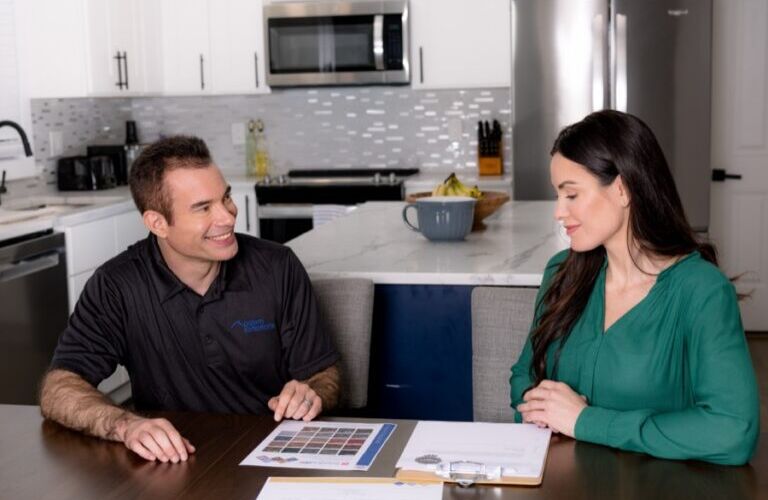
Get three quotes minimum, and ask each contractor to break the number down: materials, labor, tear-off, permits, disposal, and any projected repair costs. A quote that’s just a single number isn’t a quote, it’s a guess.
Verify licensing and insurance yourself. Delaware requires roofing contractors to carry general liability and workers’ comp. Ask for certificates and call the insurer to confirm they’re current. This takes ten minutes and is worth every second.
The red flag list is short and everyone ignores it anyway: don’t pay full payment upfront (10-30% deposit, balance at completion is standard), don’t accept “today only” pricing, don’t hire storm chasers who knock on your door after a weather event. Every spring, out-of-state crews show up after a bad storm, do the work, collect payment, and six months later when the flashing fails nobody answers the phone.
Best time to replace your roof in Delaware
Late fall and winter (November through February) are the slow season. You’ll generally get better pricing because crews need work. By June, most reputable contractors in northern Delaware are booked four to six weeks out. If your roof can wait, the off-season can save you 5-10%.
Financing a new roof
Not everyone has $14,000 in a savings account.
Contractor financing through lending partners is common, typically 12-60 month terms. Watch for “0% interest” promotions that carry deferred interest: if you don’t pay off the full balance in the promotional window, you owe interest on the original amount retroactively. Read the fine print.
Home equity loans or HELOCs are usually the cheapest option if you have equity, with rates lower than personal loans and potentially tax-deductible interest. FHA Title I loans go up to $25,000 with no equity requirement, which makes them accessible for newer homeowners. Personal loans from banks or online lenders are faster to get but carry higher rates (6-18%).
Delaware participates in PACE (Property Assessed Clean Energy) financing for qualifying energy-efficient improvements, which can include certain roof upgrades with reflective or insulation components. Repayment goes through your property tax assessment for up to 20 years.
Factor financing cost into your total. A $14,000 roof at 9% over five years costs you almost $17,500 total.
GAF Master Elite certification and what it means for your warranty
We’re GAF Master Elite certified. About 3% of roofing contractors in the country qualify. It requires verified licensing, insurance, business stability, and trained installation teams — not just a check.
The part that matters for you: it lets us offer GAF’s Golden Pledge Limited Warranty. That’s 50 years of material coverage and 25 years of workmanship coverage backed by GAF directly, not by us. If our company went under tomorrow, your warranty would still be valid because GAF stands behind it independently. Standard contractors can only offer warranties they back themselves, which are worth exactly as much as that contractor’s ability to stay in business for the next 25 years.
That’s a real difference. Whether you call us or another Master Elite installer, it’s worth factoring into your comparison.
Frequently asked questions
How long does a roof replacement take?
One day for most homes under 2,500 square feet with architectural shingles. We staff jobs to finish same-day because nobody wants their house open to weather overnight.
Do I need a permit to replace my roof in Delaware?
Yes.
Roof repair vs. full replacement
If the damage is localized — missing shingles in one area, one leak point — repair usually makes sense. If your roof is past 20 years with widespread granule loss, multiple leaks, or visible sagging, it’s replacement territory. Get two opinions from contractors who don’t have a financial stake in pushing one answer over the other. An honest roofer will tell you when a $600 repair buys you five more years.
Best time of year for roof replacement
Spring and fall for weather. Winter for pricing. We install year-round as long as temperatures stay above 40°F. The shingle adhesive strips need a few warm days to fully seal, but Delaware gets enough random 50-degree days even in January that this rarely holds up a project.
We had exactly one job pause last winter because of a cold snap in February. Crew came back the following Monday when it hit 45 and finished by noon. The customer’s cat escaped during the initial day through a door that got propped open while carrying materials. Cat came back the next morning. We keep doors closed now.
Can I put new shingles over old ones?
Delaware allows it if you only have one layer. I’d recommend against it. You’re hiding potential decking problems, adding weight, trapping heat between layers (which shortens the new shingles’ life), and voiding some manufacturer warranties. The tear-off cost is $2,000-$5,000 and it’s worth it.
Does a new roof increase home value?
National data says 60-70% cost recoup at resale. More important than the dollar figure: a visibly worn roof can kill a deal entirely. Buyers and inspectors notice the roof before they notice anything else.
Get a free roof inspection and cost estimate
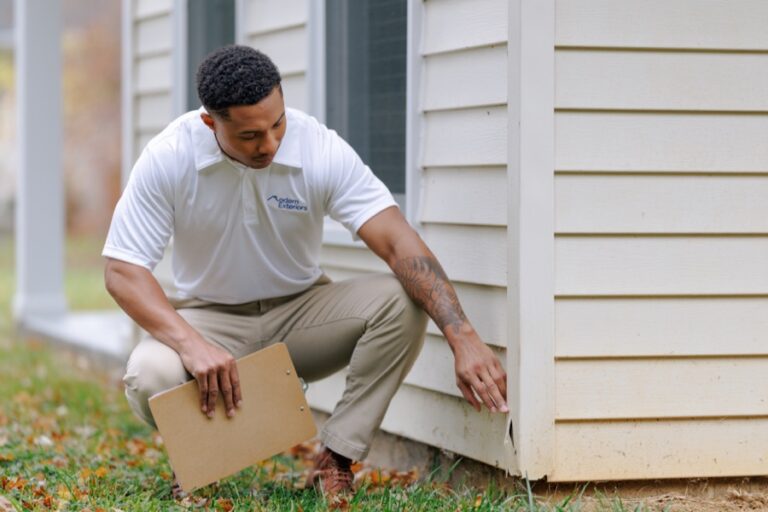
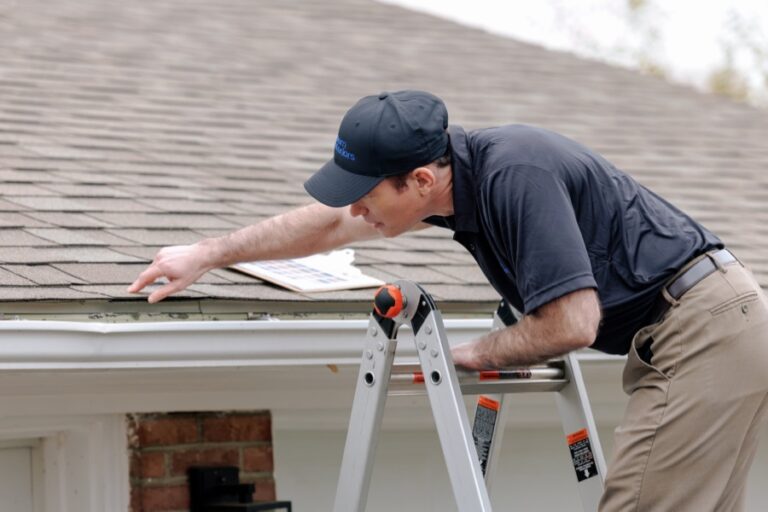
We’ll send an inspector out, assess your roof’s condition, and give you a detailed, itemized estimate. Learn more about what a roof inspection costs. No obligation, no pressure, no follow-up calls every three days.
We cover Wilmington, Newark, Dover, and everywhere in between.
Schedule Your Free Roof Inspection →
Modern Exteriors is a GAF Master Elite certified contractor serving Delaware, southeast Pennsylvania, southern New Jersey, and northern Maryland. Licensed. Insured. Veteran-owned.