We install architectural shingles on about 95% of our projects. That’s not a sales pitch. It’s what happens when you compare the options side by side and factor in what roofs deal with in the Mid-Atlantic.
This article is going to be lopsided, and I’m not going to pretend otherwise. If you want a balanced treatment where every shingle type gets equal attention, there are plenty of those online. I’m going to tell you what we recommend, why, and then cover the alternatives for the people who want them.
Architectural shingles: the one we recommend
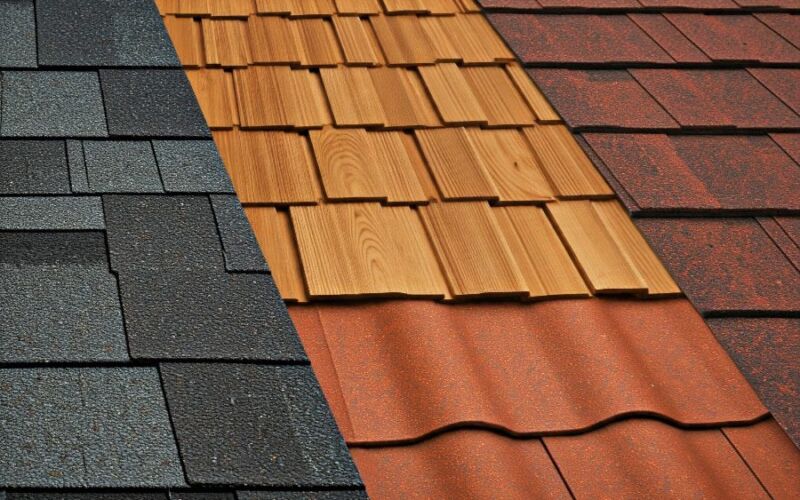
Architectural shingles (also called dimensional or laminate shingles) are built with two or more layers of asphalt bonded together. That layered construction creates a thicker profile with depth and shadow lines that mimic the look of natural slate or wood shake. More importantly, the multi-layer design makes them heavier and more wind-resistant than single-layer shingles.
The numbers that matter:
- Wind rating: Up to 130 mph (GAF Timberline HDZ carries a lifetime limited warranty with 130 mph wind coverage). If you’re in coastal Sussex County where enhanced wind codes require 110-120 mph ratings, this is the only standard shingle category that qualifies without special installation gymnastics.
- Lifespan: 25-30 years is realistic, and some product lines carry warranties stretching further. The warranty and the actual performance are different conversations, but 25 years of real-world service is what we see when we tear off architectural roofs that were properly installed.
- Cost: 20-40% more than three-tab. On a typical 2,000-square-foot home, that translates to roughly $2,000-$3,500 more than three-tab for the full job. Your total roof replacement cost depends on a dozen other factors, but the shingle upgrade itself isn’t the budget-breaker people expect.
GAF Timberline HDZ
I’m going to name a specific product because it’s what we install most, and pretending to be brand-neutral isn’t useful.
The Timberline HDZ is the best-selling shingle in North America. There’s a reason for that. The StrikeZone nailing area is wider than competing products, which means faster, more accurate installation and fewer nail placement errors. Consumer Reports rates architectural shingles as the top-performing category, and the HDZ consistently performs well in independent testing.
As a GAF Master Elite contractor, we can offer the Golden Pledge warranty with HDZ installations: 50 years on materials, 25 years on workmanship, backed by GAF directly. If we close shop tomorrow, GAF still honors the warranty. That matters more than most homeowners realize when they’re comparing quotes.
The HDZ comes in roughly 20 color options. Charcoal, Weathered Wood, and Barkwood move the most volume around here. Pewter Gray has gotten more popular in the last two years, especially on the newer builds in Middletown and the beach communities.
Why they handle nor’easters better
This is where local climate makes architectural shingles a particularly easy recommendation. We get nor’easters that push sustained winds of 50-60 mph with gusts above 80. A shingle rated for 60-70 mph is right at the edge of failure in those conditions. A shingle rated for 130 mph has margin.
There’s also the weight factor. Architectural shingles weigh 50-80% more per square than three-tab. In high winds, weight is your friend. Lighter shingles lift more easily, and once the wind gets under an edge, it peels the shingle back and exposes your roofing underlayment and decking to driven rain.
We’ve done storm damage repairs where an entire slope of three-tab shingles peeled off while the architectural shingles on the adjacent slope stayed put. Same house, same storm, same crew who installed both sides. The only variable was the shingle type.
Three-tab shingles: the budget option we don’t recommend
Three-tab shingles are a single layer of asphalt with cutouts (tabs”>underlayment that create a uniform, flat pattern. They’ve been around forever. Your parents’ roof was probably three-tab. Your grandparents’ roof was definitely three-tab.
Three-tab shingles are a dying product. We still install them occasionally when a customer insists on the lowest possible price, but we make sure they understand what they’re giving up.
The installed cost runs $3.50-$5.00 per square foot. That’s cheaper. It’s also a 15-20 year product with a 60-70 mph wind rating. In a region where a bad nor’easter can exceed those wind speeds, you’re buying a roof that’s designed right up to the edge of your local conditions instead of comfortably above them.
The math gets worse when you look at it per year of service. Three-tab at $4.25/sq ft lasting 17 years is about $0.25 per square foot per year. Architectural at $5.50/sq ft lasting 27 years is about $0.20 per square foot per year. You pay more upfront for architectural and still spend less over time.
Three manufacturers have quietly reduced their three-tab product lines in the last few years. The writing is on the wall. When a product category starts shrinking in an industry, it’s not because demand is strong.
I’ll save you $1,800-$2,400 on the install and cost you a roof replacement ten years sooner. That’s the trade.
Designer and luxury shingles
These exist. They’re beautiful. GAF makes the Camelot and Grand Canyon lines, Owens Corning has the Berkshire collection, CertainTeed offers Carriage House and Grand Manor. They mimic slate and cedar shake with thick, sculpted profiles and premium color palettes.
They also cost 2-3x what architectural shingles cost. On a 2,000-square-foot home, you might be looking at $25,000-$35,000 installed for a premium designer shingle roof.
We install maybe five or six designer roofs a year, usually on high-end custom homes or historic renovations where the homeowner wants the slate look without the structural requirements of actual slate (slate is heavy, and a lot of older homes can’t support it without reinforcing the framing).
If your budget accommodates it and curb appeal is a priority, they’re a legitimate option. But for most homeowners weighing a practical decision about protecting their house, architectural shingles deliver 90% of the visual appeal at 40% of the cost.
What about metal, slate, and tile?
Not covering those in depth here because they’re fundamentally different products, not variations on the asphalt shingle concept. Metal roofing is worth its own conversation, especially if you’re thinking long-term (40-70 year lifespan). Slate and clay tile are niche, gorgeous, and expensive. If you want specifics on what a new roof costs in Delaware across all material types, we break that down separately.
The coastal wind zone changes everything
This is worth pulling out separately because the coastal wind zone in Sussex County changes the calculation.
The building code references ASCE 7 wind speed maps, and the coastal areas (Lewes, Rehoboth, Bethany, Fenwick Island, and stretching inland further than most people expect) fall into the 110-120 mph ultimate design wind speed zone. Your shingle needs to carry a wind rating that meets or exceeds the code requirement for your specific location, and three-tab doesn’t get there.
Beyond code compliance, there’s the practical reality. Salt air accelerates degradation of roofing materials. The asphalt in shingles oxidizes faster in coastal environments. You want the thicker, heavier shingle with the longer warranty because it has more material to lose before it’s compromised.
The six-nail pattern required in high-wind zones adds about $300-$500 to the installation cost. That’s already factored into coastal quotes, so don’t be surprised if your number comes in higher than your cousin’s roof in Dover. The ice and water shield requirements are more extensive too, which is a separate but related cost factor.
I had a homeowner in Bethany Beach last spring ask why his quote was $3,000 more than his brother-in-law’s in Smyrna for a similar-sized house. The answer was entirely wind code and coastal installation requirements. Same shingle, same crew, different building code zone.
Picking a color
Quick aside because people agonize over this more than they should: your shingle color has a minimal effect on energy efficiency despite what the internet says. Yes, dark shingles absorb more heat. But with proper attic ventilation and insulation, the difference in cooling costs is negligible. Pick what looks good on your house.
That said, if you’re in an HOA, check the approved colors before you fall in love with Hickory. Nothing worse than ordering 30 squares of a color your HOA rejects.
FAQ
Are architectural shingles worth the extra cost over three-tab?
Yes.
What’s the best roofing shingle brand?
We install GAF almost exclusively and have had excellent results. Owens Corning and CertainTeed also make quality products. The brand matters less than the installation. A mediocre shingle installed by a great crew will outperform a premium shingle installed poorly. We’ve repaired plenty of expensive roofs that failed because of installation mistakes, not material defects.
How long do architectural shingles last?
25-30 years in typical conditions. Could be less if the attic ventilation is poor (trapped heat cooks shingles from below) or if the roof faces prolonged sun exposure with no shade. Could be more on a well-ventilated roof with moderate exposure. The warranty says one thing. The roof says another. Trust the roof.
Can I put new shingles over old ones?
Technically yes, if you only have one existing layer and the roof decking is solid. But we don’t recommend it. You can’t inspect the decking or underlayment without tearing off the old shingles. You're hiding potential problems under new material and adding weight to the structure. Most manufacturers also void or limit warranties on overlay installations.
Do darker shingles make my house hotter?
The effect is measurable in a lab and mostly irrelevant in a properly insulated home. Proper attic ventilation matters fifty times more than shingle color for managing heat. We’ve installed Charcoal (one of the darkest options”>decking on hundreds of homes and never had a callback about heat. If your attic is hitting 150°F in summer, the problem is ventilation and insulation, not shingle color. Fix the soffit vents and ridge vent before you start worrying about whether Weathered Wood runs two degrees cooler than Charcoal.
What wind rating do I need in Delaware?
Depends on your location. Inland areas: 90-100 mph basic wind speed zones, which most architectural shingles exceed easily. Coastal Sussex County: 110-120 mph ultimate design wind speed zones, which requires architectural-grade shingles with enhanced nailing patterns. Three-tab doesn’t meet coastal code.
Ready to talk shingles?
We’ll walk you through your options with actual samples, give you a quote based on your specific roof, and tell you exactly what we’d put on our own house. Free estimates, no pressure, no follow-up calls you didn’t ask for.